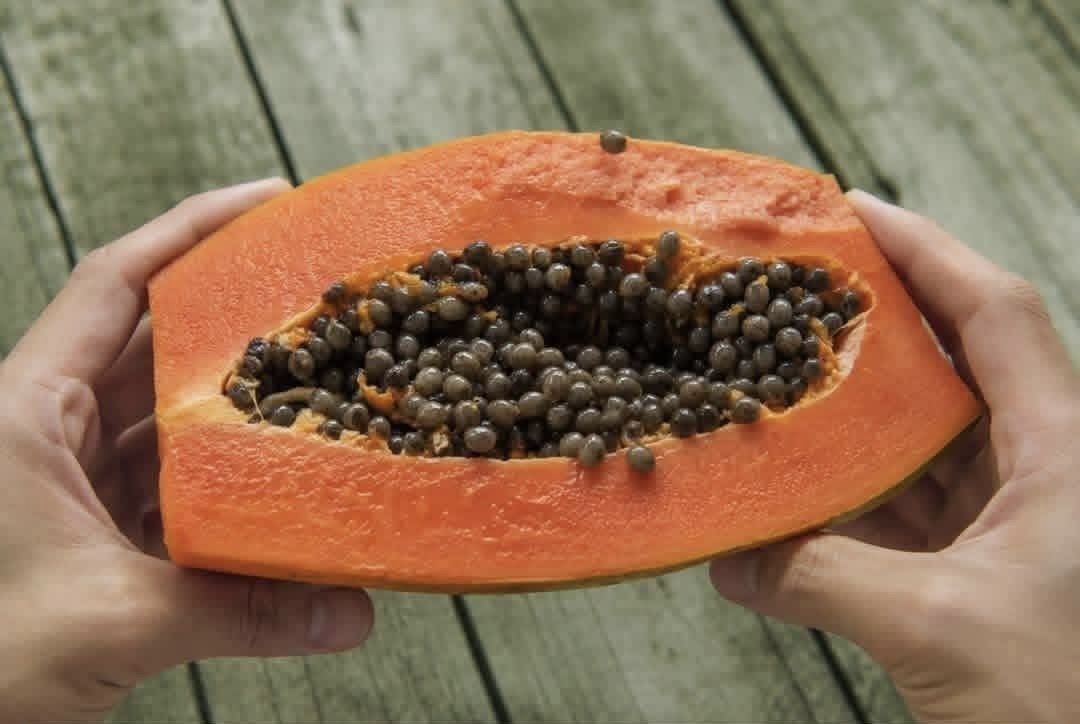
Papaya is one of those fruits that looks almost too beautiful to eat. Cut it open and you get bright orange flesh surrounding hundreds of glossy black seeds.
Beyond its tropical sweetness, papaya provides vitamin C, vitamin A precursors, folate, fiber, potassium, and several naturally occurring plant compounds.
You may have seen social media posts claiming papaya can “eliminate cancer cells” or prevent blindness. Those claims go far beyond what research supports. Papaya is a nutritious food, but it is not a cancer treatment and cannot restore lost eyesight.
Still, there are plenty of good reasons to enjoy it.
What Makes Papaya Nutritious?
Ripe papaya is naturally sweet while being mostly water, which makes it refreshing and easy to incorporate into breakfast or snacks.
It provides vitamin C, an antioxidant nutrient involved in immune function, collagen production, and normal tissue repair.
The beautiful orange color comes partly from carotenoid pigments.
Papaya also provides dietary fiber, particularly when you eat the whole fruit rather than drinking strained papaya juice.
That fiber can contribute to normal digestion and helps make fresh fruit more satisfying.
Papaya and Digestive Health
Papaya contains an enzyme called papain, which helps break down proteins.
This is one reason papaya has traditionally been associated with digestion and is even used commercially as a meat tenderizer.
But you don’t need huge quantities.
A normal serving of ripe papaya can be incorporated into an ordinary balanced diet without turning breakfast into a complicated “detox protocol.”
Papaya also supplies water and fiber, two simple dietary factors that help support normal bowel function.
What About Papaya and Cancer?
This deserves some clarification because exaggerated claims about papaya are common online.
Researchers have investigated various compounds found in papaya and other plants in laboratory settings.
That’s interesting scientifically, but a laboratory experiment involving isolated cells or concentrated extracts does not mean eating papaya destroys cancer inside a person’s body.
There is currently no papaya recipe proven to eliminate every cancer cell.
Someone undergoing cancer treatment should not replace oncology care, medication, chemotherapy, radiotherapy, surgery, immunotherapy, or another prescribed treatment with papaya or a homemade remedy.
Papaya can instead be enjoyed for what it genuinely is: nutritious food.
Papaya and Eye Health
Papaya contains nutrients associated with a healthy diet, including vitamin C and carotenoids.
A varied diet containing colorful fruits and vegetables can contribute to overall eye nutrition.
Other foods worth rotating into an eye-friendly diet include leafy greens, carrots, sweet potatoes, citrus fruits, berries, eggs, nuts, and appropriate sources of omega-3 fats.
However, eating papaya cannot reverse blindness, remove cataracts, or instantly restore damaged vision.
Sudden or unexplained vision loss needs medical evaluation rather than a home remedy.
Easy Papaya Breakfast Bowl
Here’s a delicious way to turn the fruit in the picture into an easy breakfast.
Ingredients
- 1½ cups ripe papaya, cubed
- ¾ cup plain Greek yogurt
- ½ banana, sliced
- ¼ cup blueberries or strawberries
- 1 tablespoon chia seeds
- 1 tablespoon chopped walnuts or almonds
- 1 teaspoon honey, optional
- Fresh lime juice to taste
Preparation
Cut the papaya lengthwise.
Use a spoon to scoop out the black seeds.
Peel the papaya and cut the orange flesh into bite-sized cubes.
Spoon the yogurt into a bowl and arrange the papaya and banana over it.
Add berries, chia seeds, and chopped nuts.
Finish with a squeeze of lime.
Taste it before reaching for the honey. A properly ripe papaya is often sweet enough already.
Serve immediately.
Refreshing Papaya Smoothie
If you have an especially ripe papaya that needs using quickly, smoothies are perfect.
Ingredients
- 1½ cups ripe papaya
- ½ frozen banana
- 1 cup plain yogurt or unsweetened milk
- ½ cup cold water
- Juice of ½ lime
- ½ teaspoon freshly grated ginger
- 1 teaspoon chia seeds
- Ice cubes
Preparation
Place everything in a blender.
Blend for about 30–45 seconds, or until creamy.
If it’s too thick, add another splash of water.
If you want it colder and thicker, add a few extra ice cubes or use frozen papaya.
This recipe doesn’t require added sugar.
The banana and ripe papaya provide plenty of natural sweetness.
Simple Papaya-Lime Drink
For something lighter, skip the yogurt.
You’ll need:
- 2 cups ripe papaya
- 3 cups cold water
- Juice of 1 lime
- A few mint leaves
- Ice
Blend the papaya with one cup of water until smooth.
Pour it into a pitcher and add the remaining water.
Stir in the lime juice.
Add mint and ice and refrigerate until cold.
For maximum fiber, don’t strain it.
Should You Eat Papaya Seeds?
Those shiny black seeds are edible in small culinary amounts, but they taste nothing like the sweet flesh.
They’re sharp, peppery, and somewhat bitter.
Although papaya seeds are sometimes promoted online as remedies for numerous diseases, evidence for taking large or concentrated quantities medicinally is limited.
There’s no established papaya-seed dose for treating cancer or restoring eyesight.
For everyday recipes, simply scoop them out.
If you want to experiment with their unusual flavor, a very small amount can occasionally be used more like a seasoning rather than consuming spoonfuls as a supplement.
Pregnant people, children, people taking medication, or anyone considering concentrated papaya-seed preparations should be particularly cautious and seek professional advice first.
How to Tell When Papaya Is Ripe
A ripe papaya should give slightly when pressed gently with your thumb.
The skin often develops yellow or orange areas as it ripens.
If it’s rock-hard and predominantly green, leave it at room temperature for another day or two.
Once ripe, move it into the refrigerator to slow further ripening.
Don’t wait too long, though.
There’s a surprisingly small window between “perfectly ripe tropical fruit” and “why does my refrigerator smell like that?” 😄
How to Store Cut Papaya
After cutting the fruit, scoop out the seeds and transfer the remaining papaya to an airtight container.
Keep it refrigerated.
For the nicest texture and flavor, try to eat cut papaya within about 2–3 days.
You can also freeze papaya.
Cut the flesh into cubes, arrange them separately on a tray, and freeze until firm.
Transfer the frozen pieces to a freezer-safe container afterward.
They’re excellent for smoothies because frozen papaya makes them naturally thick and creamy.
Ways to Eat More Papaya
Papaya doesn’t have to become a complicated wellness recipe.
Try it:
- Cubed with lime juice
- Mixed into plain yogurt
- Blended into smoothies
- Added to fruit salad
- Served alongside oatmeal
- Combined with berries and nuts
- Frozen for summer snacks
- Added to fresh tropical salsa
One of the tastiest combinations is papaya with fresh lime. The acidity balances the fruit’s sweetness beautifully.
A Note About “Detox” Recipes
You don’t need to drink gallons of papaya juice to “clean” your body.
Your liver and kidneys already perform essential processing and waste-removal functions continuously.
Eating nutritious foods supports normal health, but food doesn’t need to be described as a cleanse to be worthwhile.
A much more sustainable approach is wonderfully boring: eat plenty of different plants, get adequate protein, stay hydrated, sleep well, remain physically active, and enjoy treats in reasonable amounts.
Papaya fits beautifully into that picture.
Frequently Asked Questions
Can papaya cure cancer?
No. Papaya is nutritious, but it hasn’t been demonstrated to cure cancer in humans and should never replace cancer treatment.
Does papaya improve eyesight?
Papaya provides nutrients that can be part of a diet supporting normal eye health, but it cannot restore lost eyesight.
Can papaya remove cataracts?
No. Eating papaya cannot dissolve an established cataract.
Is papaya good for digestion?
Papaya contains fiber, water, and the protein-digesting enzyme papain. It can comfortably be included in a balanced diet that supports normal digestive health.
Is papaya juice better than whole papaya?
Usually, whole papaya is the better everyday choice because you retain its fiber.
A smoothie that keeps the entire edible flesh is another good option.
Can I eat papaya every day?
For most healthy adults, papaya can be eaten regularly as part of a varied diet. There’s no need to consume enormous amounts or follow a special papaya regimen.
Final Thoughts
Papaya doesn’t need miracle promises to deserve a place in the kitchen.
It’s naturally sweet, colorful, refreshing, rich in useful nutrients, and incredibly easy to prepare.
Enjoy it with yogurt and nuts for breakfast, blend it with lime for a refreshing smoothie, or simply chill a few cubes and eat them straight from the refrigerator.
Think of papaya as one colorful piece of a balanced diet rather than medicine in fruit form.
That’s less dramatic than the viral posts—but a lot more useful in real life.