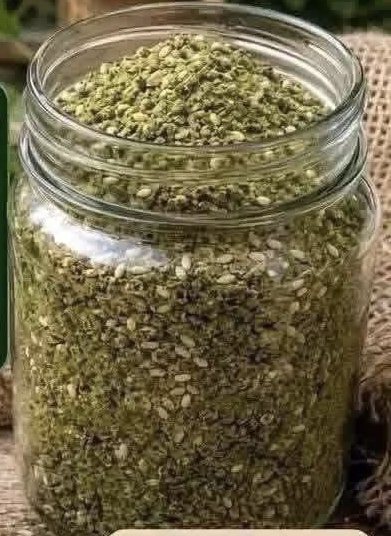
The green seed mixture in the image looks like one of those old-fashioned homemade pantry blends that instantly makes people curious.
It is promoted as being “full of collagen,” but there is one important distinction: plants and seeds do not actually contain collagen. Collagen is an animal protein.
What certain seeds can provide are nutrients your body uses to maintain normal skin, hair, bones, and connective tissue.
That makes a homemade seed blend a useful addition to breakfast, yogurt, oatmeal, smoothies, or salads without promising that one tablespoon will magically erase years from your face.
The exact ingredients in the photo cannot be confirmed from appearance alone, so the recipe below is a practical seed mixture inspired by the image rather than an attempt to guess an unknown formula.
Why Seeds Are Worth Adding to Your Diet
Seeds are tiny, but nutritionally they pack quite a lot into a small spoonful.
Different seeds can provide protein, healthy fats, fiber, magnesium, zinc, copper, selenium, and other micronutrients.
Several of these nutrients play roles in maintaining normal skin and connective tissue.
For example, your body needs adequate protein to build structural proteins.
Vitamin C is required during normal collagen production.
Zinc and copper also contribute to processes involved in skin and connective tissue maintenance.
No single seed supplies everything, which is why combining several varieties can be more interesting than relying on just one.
Simple Homemade Seed Mix
This version is easy to prepare and can be stored for quick daily use.
Ingredients
- ½ cup sesame seeds
- ½ cup pumpkin seeds
- ½ cup ground flaxseed
- ¼ cup chia seeds
- ¼ cup sunflower seeds
- 2 tablespoons unsweetened shredded coconut, optional
- ½ teaspoon cinnamon, optional
This makes a generous jar that can last for several weeks depending on how often you use it.
One to two tablespoons is usually plenty for a serving.
There is no need to eat a giant bowl of seeds just because they are nutritious.
How to Prepare the Mix
Start with clean, dry seeds.
If using whole pumpkin or sunflower seeds, place them in a dry skillet over low heat.
Toast gently for about three to five minutes.
Stir frequently.
You only want a light nutty aroma.
Do not burn them.
Allow the seeds to cool completely.
Add the sesame, pumpkin, sunflower, flax, and chia seeds to a food processor.
Pulse briefly.
Do not blend until the mixture becomes seed butter.
You want a coarse texture similar to the mixture shown in the image.
Stir in the optional coconut and cinnamon.
Transfer everything to a clean, dry glass jar.
Seal tightly.
How to Use It
The easiest way is to sprinkle one tablespoon over breakfast.
Try it with:
- Plain yogurt
- Oatmeal
- Overnight oats
- Smoothies
- Fruit bowls
- Cottage cheese
- Salads
- Soups
- Toast with nut butter
You can also stir a spoonful into pancake or muffin batter.
The mixture has a mild nutty flavor, so it blends easily into both sweet and savory foods.
An Easy Breakfast Bowl
For a quick breakfast, combine:
- ¾ cup plain Greek yogurt
- ½ cup berries
- 1 tablespoon seed mix
- 1 tablespoon rolled oats
- A few slices of banana
- A small drizzle of honey, optional
Stir everything together.
The yogurt contributes protein, the fruit adds vitamin C and natural sweetness, and the seed mix provides texture and healthy fats.
This is a much more realistic way to support overall nutrition than relying on a tablespoon of powder as an anti-aging treatment.
Why Vitamin C Matters Too
A seed mixture alone is not the whole story.
Vitamin C is required for normal collagen synthesis.
That is why pairing seeds with foods containing vitamin C makes sense.
Good options include:
- Oranges
- Kiwi
- Strawberries
- Papaya
- Guava
- Bell peppers
- Broccoli
- Tomatoes
You do not need supplements if your diet already provides enough.
For example, yogurt with strawberries and a spoonful of seed mix creates a simple combination of protein, healthy fats, fiber, and vitamin C.
Sesame Seeds
Sesame seeds are visible in many homemade wellness mixtures.
They provide healthy fats, protein, calcium, magnesium, copper, and other minerals.
Their mild flavor also makes them easy to use.
You can choose white, golden, or black sesame seeds.
Lightly toasting them enhances the flavor, but raw seeds work too.
Tahini is another convenient way to enjoy sesame.
A spoonful mixed with lemon juice makes a quick dressing for salads and vegetables.
Pumpkin Seeds
Pumpkin seeds add crunch and a slightly richer flavor.
They provide protein, magnesium, zinc, iron, and unsaturated fats.
Zinc is involved in many normal processes in the body, including tissue maintenance.
Use plain, unsalted pumpkin seeds whenever possible.
Heavily salted versions can turn a healthy mixture into a surprisingly high-sodium snack.
Flaxseed
Flaxseed is particularly useful because it provides fiber and alpha-linolenic acid, a plant-based omega-3 fatty acid.
Ground flaxseed is usually easier to incorporate into meals than whole flaxseed.
Whole flax seeds can sometimes pass through the digestive system without being fully broken down.
Because flax contains oils, it can become rancid over time.
That is why ground flax is best stored in the refrigerator.
Chia Seeds
Chia seeds absorb liquid and develop a gel-like texture.
They provide fiber, plant protein, minerals, and omega-3 fats.
When used in the dry seed mix, one tablespoon is usually enough to add texture without making your meal overly thick.
If you prefer chia pudding, mix:
- 2 tablespoons chia seeds
- ½ cup milk
- A few drops of vanilla
- Fresh fruit
Refrigerate for several hours.
Add one teaspoon of the seed mixture before serving.
Sunflower Seeds
Sunflower seeds provide vitamin E, healthy fats, and minerals.
Vitamin E acts as an antioxidant and contributes to normal cell protection.
Use unsalted seeds for the homemade blend.
They also work well alone as a topping for salads, soups, and roasted vegetables.
Does This Mix Contain Collagen?
No.
Plant seeds do not contain collagen.
They can provide nutrients that participate in the body’s normal maintenance processes, but the body still has to make its own collagen.
Collagen itself is naturally found in animal connective tissue.
Some commercially sold collagen powders are made from bovine, porcine, chicken, or marine sources.
A seed mixture and a collagen supplement are therefore not the same product.
That does not make one automatically better than the other.
They simply provide different nutrients.
Will One Tablespoon Make You Look Younger?
Unfortunately, there is no tablespoon that can make age impossible to guess after three months.
Skin appearance depends on many factors.
These include genetics, sun exposure, smoking, sleep, hydration, diet, hormones, stress, and normal aging.
Good nutrition helps support healthy skin, but it does not freeze time.
A seed mix is best treated as food, not as a cosmetic treatment.
And honestly, it is still worth making even without promising to turn 60 into 30.
Supporting Skin From Everyday Foods
A balanced eating pattern for skin health can include plenty of:
- Colorful vegetables
- Fresh fruit
- Nuts and seeds
- Eggs
- Fish
- Yogurt
- Beans
- Whole grains
- Olive oil
Adequate protein is particularly important because proteins provide amino acids your body needs for tissue maintenance.
Hydration matters too.
So does protecting your skin from excessive ultraviolet exposure.
There is no food that can compensate completely for years of intense sun exposure.
What About Hair?
Hair is primarily made from keratin, another protein.
Seeds can contribute nutrients such as protein, zinc, iron, selenium, and healthy fats.
However, sudden or significant hair loss can have many causes.
These include nutritional deficiencies, thyroid problems, hormonal changes, medications, stress, and certain medical conditions.
A seed mix may be nutritious, but it should not be treated as a cure for unexplained hair loss.
What About Joints?
Healthy joints depend on cartilage, muscles, bones, tendons, ligaments, body weight, activity, previous injuries, and many other factors.
Seeds can certainly be part of a nutritious diet.
Their healthy fats and minerals make them useful foods.
But eating one tablespoon does not rebuild damaged cartilage or eliminate arthritis.
Regular movement, maintaining muscle strength, and getting appropriate treatment when joint pain persists are much more important.
A Simple Smoothie Version
You can also use the mix in a smoothie.
Ingredients
- 1 cup unsweetened milk or yogurt
- ½ banana
- ½ cup berries
- 1 tablespoon seed mix
- ½ cup ice
- Cinnamon to taste
Blend until smooth.
Serve immediately.
The berries provide vitamin C while yogurt or milk adds protein.
It makes a filling breakfast or afternoon snack without requiring a complicated list of supplements.
Storage
Because seeds contain natural oils, proper storage matters.
Keep the finished mixture in an airtight glass jar.
For the best quality, refrigerate it.
Try to use it within about three to four weeks.
You can also freeze a larger batch and keep only a small jar in the refrigerator.
Always use a clean, dry spoon.
Moisture can shorten storage life.
Discard the mixture if it develops a bitter, paint-like, stale, or unpleasant smell.
Those can be signs that the oils have become rancid.
Important Allergy Note
Seeds can cause allergic reactions in some people.
Sesame in particular is a recognized food allergen.
If you have a known seed allergy, leave that ingredient out completely.
Do not assume a small amount is safe.
People taking medications or following medically prescribed diets should also consider whether large amounts of seeds fit their individual needs.
Frequently Asked Questions
Can I take one tablespoon every day?
For many healthy adults, one tablespoon can fit comfortably into a varied diet.
There is no requirement to use it daily.
Does it contain real collagen?
No.
Seeds do not naturally contain collagen.
Should I grind the seeds?
Grinding some of the seeds makes the mixture easier to add to foods.
Flaxseed in particular is commonly used ground.
Can I add nuts?
Yes.
Walnuts, almonds, or hazelnuts can be added if you have no nut allergy.
Keep the mixture refrigerated because nuts also contain oils that can become rancid.
Can I add honey?
Honey is better added to individual servings rather than stored in the dry mixture.
Adding liquid would reduce storage life.
Can children eat it?
Small amounts of appropriately prepared seeds can be part of many children’s diets, but whole seeds may present choking concerns for young children. Age-appropriate preparation matters.
Can I use the mix in baking?
Absolutely.
Add a tablespoon or two to muffins, bread, pancakes, or homemade granola.
Final Thoughts
The jar shown in the image may be promoted as being “full of collagen,” but a more accurate description is a nutrient-rich seed mixture.
Seeds do not contain collagen themselves.
What they can provide are protein, healthy fats, fiber, zinc, copper, magnesium, vitamin E, and other nutrients that contribute to a balanced diet.
Mix sesame, pumpkin, flax, chia, and sunflower seeds, keep the jar refrigerated, and sprinkle a spoonful over yogurt, oatmeal, smoothies, or salads.
Pair it with colorful fruit and vegetables, adequate protein, good hydration, regular movement, and reasonable sun protection.
It may not make everyone suddenly forget your age.
But it can make breakfast considerably more interesting—and that is a pretty good reason to keep a jar ready.