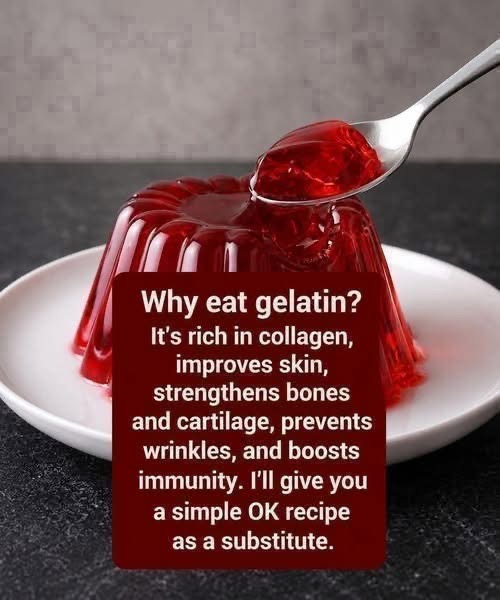
Gelatin desserts are simple, inexpensive, and easy to prepare at home. The bright red jelly shown in the image is a good example of how gelatin can become a fun snack with very little effort.
Gelatin is made from collagen-rich animal tissues and provides protein, including amino acids such as glycine and proline. However, it is important to keep expectations realistic: eating gelatin is not a proven way to prevent wrinkles, strengthen bones by itself, or “boost immunity” in a dramatic way.
Research on collagen supplements has found some potential benefits for skin hydration and elasticity, but the evidence concerns particular collagen products and doses rather than ordinary gelatin desserts. Recent reviews also note limitations in the available studies.
So rather than treating gelatin as a miracle food, think of it as one possible source of protein that can fit into a balanced diet.
What Is Gelatin?
Gelatin is a protein obtained by processing collagen.
Collagen is naturally present in connective tissues such as skin, tendons, cartilage, and bones. When collagen is processed with heat and water, it can form gelatin, which has the familiar ability to turn liquids into a soft jelly.
That is why gelatin is commonly used in:
- Jelly desserts
- Gummies
- Marshmallows
- Some puddings
- No-bake desserts
- Fruit desserts
- Certain savory dishes
Does Gelatin Really Contain Collagen?
Gelatin comes from collagen, but it is more accurate to say that gelatin is derived from collagen rather than describing a serving of jelly as a concentrated collagen supplement.
Once consumed, proteins are digested into amino acids and small peptides. The body then uses those building blocks wherever they are needed.
This is one reason it is better to include gelatin as part of an overall nutritious diet rather than expecting it to act directly on one particular part of the body.
What About Skin Health?
This is where the original image’s claim needs some clarification.
Several clinical studies have investigated hydrolyzed collagen supplements and skin outcomes. A 2023 systematic review and meta-analysis of 26 randomized controlled trials found improvements in measured skin hydration and elasticity among people taking hydrolyzed collagen compared with placebo. The authors also noted limitations and the need for larger, better-quality trials.
More recent evidence continues to suggest that oral collagen peptides may improve some measures of skin hydration and elasticity, while evidence for actual wrinkle reduction is less consistent.
That does not mean that eating a bowl of red gelatin will automatically remove wrinkles.
Skin health is influenced by many factors, including genetics, age, sun exposure, smoking, sleep, overall diet, and skincare habits.
A Simple Homemade Gelatin Dessert
You can make a basic fruit gelatin dessert with only a few ingredients.
Ingredients
- 1 packet unflavored gelatin
- 240 ml cold water
- 240 ml hot water
- 120–180 ml unsweetened fruit juice
- Fresh berries or sliced fruit, optional
- A small amount of honey, optional
For a lower-sugar version, choose unsweetened juice and let the natural fruit provide most of the sweetness.
Instructions
1. Bloom the gelatin
Place the gelatin in a bowl with the cold water.
Let it sit for about 5 minutes.
The gelatin will absorb the water and become soft.
2. Add hot water
Pour in the hot water.
Stir thoroughly until the gelatin has completely dissolved.
3. Add the juice
Add the fruit juice and mix well.
Taste the mixture before adding any sweetener.
4. Add fruit
If desired, place berries or small pieces of fruit into individual glasses or a small dish.
Avoid adding fresh pineapple, kiwi, papaya, or figs unless they have been cooked first, because enzymes in some fresh fruits can interfere with gelatin setting.
5. Refrigerate
Pour the mixture over the fruit.
Refrigerate for several hours until completely set.
Serve cold.
How Can You Make It More Nutritious?
The gelatin itself is not a complete nutritional solution.
Instead, combine it with other foods.
For example, serve a small portion of gelatin alongside:
- Greek yogurt
- Fresh berries
- Nuts or seeds
- Oatmeal
- Fresh fruit
- Cottage cheese
This gives you a broader combination of protein, fiber, vitamins, minerals, and other nutrients.
Gelatin vs. Collagen Supplements
These products are related but not identical.
Gelatin is typically used as a food ingredient and forms a gel when cooled.
Hydrolyzed collagen peptides are processed differently so they dissolve more easily in liquids and do not form the same jelly structure.
Most of the clinical research discussed in recent reviews involves collagen peptides or hydrolyzed collagen, not ordinary flavored gelatin desserts.
Therefore, claims about collagen supplements should not automatically be transferred to every gelatin recipe.
What About Bones and Joints?
Collagen is an important structural protein in connective tissues and bones. Research on collagen supplementation has reported potentially favorable outcomes for some musculoskeletal measures, but results vary depending on the product, population, dosage, and outcome being measured.
Gelatin can contribute protein to the diet, but it should not replace calcium-rich foods, vitamin D, adequate overall protein, resistance exercise, or medical treatment when someone has a bone or joint condition.
A Few Things to Keep in Mind
Gelatin desserts can become surprisingly high in added sugar depending on the recipe.
For a more balanced option:
- Choose unsweetened gelatin.
- Use fruit instead of large amounts of sugar.
- Keep portions reasonable.
- Pair it with another nutritious food.
- Check the ingredient label of flavored gelatin products.
People with food allergies or dietary restrictions should also check the source of the gelatin because it may be bovine, porcine, or fish-derived.
Frequently Asked Questions
Can gelatin prevent wrinkles?
There is not enough evidence to say that ordinary gelatin prevents wrinkles. Some research on oral hydrolyzed collagen suggests improvements in skin hydration and elasticity, but the evidence for wrinkle reduction is less consistent.
Is gelatin a good source of protein?
Yes, gelatin provides protein, but it is not a nutritionally complete protein source by itself. A varied diet should provide protein from several foods.
Can I eat gelatin every day?
For most healthy people, a moderate portion can fit into a balanced diet. The overall nutritional quality of the diet matters much more than consuming gelatin every day.
Does gelatin “boost immunity”?
It is not appropriate to describe gelatin as an immunity treatment. A balanced diet provides many nutrients needed for normal immune function, but gelatin itself should not be presented as a cure or immune-boosting remedy.
Is homemade gelatin better?
Homemade gelatin gives you more control over the ingredients, especially the amount of added sugar. You can also add fruit and yogurt to make the snack more nutritious.
Final Thoughts
Gelatin can be a fun and versatile food, especially when prepared with fruit and limited added sugar.
It is derived from collagen and provides protein, but the dramatic claims often attached to gelatin recipes online—such as preventing wrinkles or producing major health changes from one serving—go beyond what the evidence supports.
The best approach is simple: enjoy gelatin as one small part of a varied, balanced diet, rather than treating it as a miracle food.