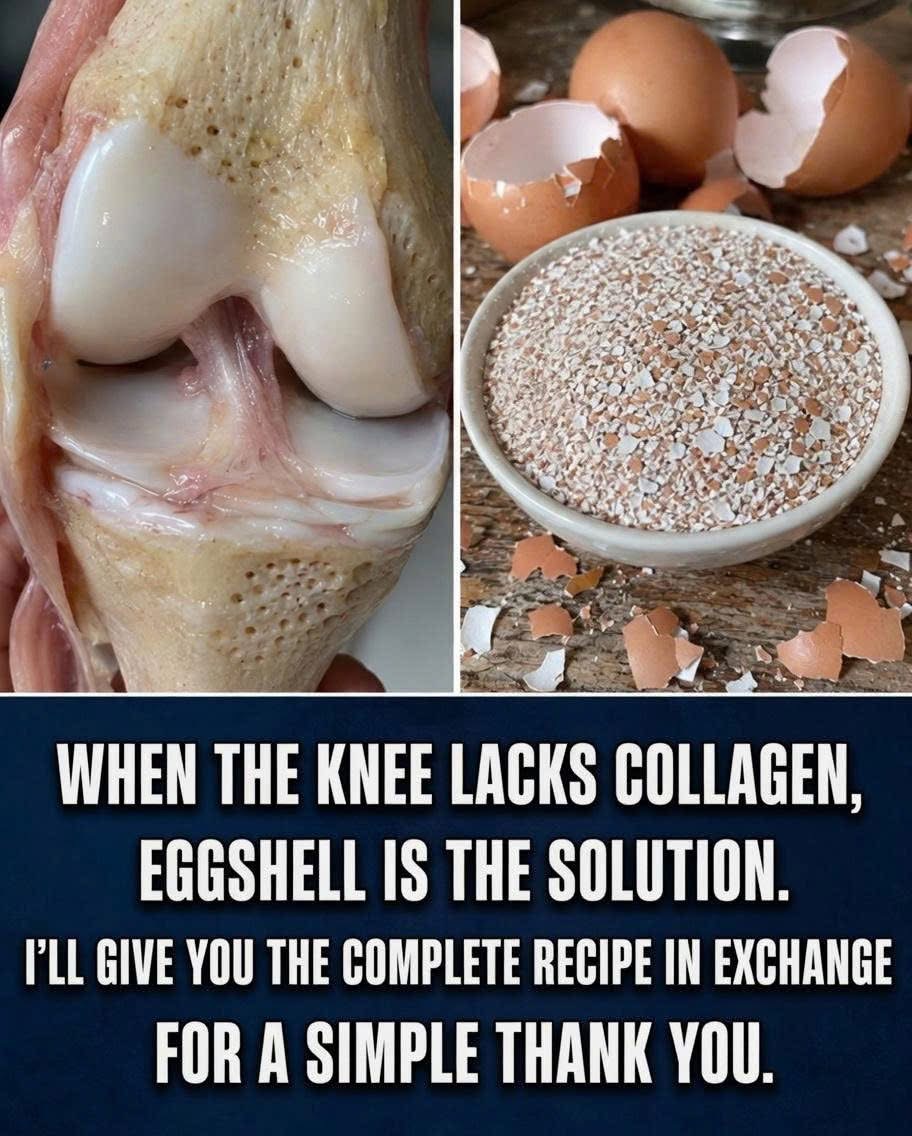
Many viral posts say, “When the knee lacks collagen, eggshell is the solution.”
It sounds simple, almost too simple.
And honestly, that is why people love it.
A small eggshell, something we usually throw away without thinking, suddenly becomes the “secret” sitting in the kitchen trash. But before we turn every breakfast into a knee-healing ceremony, let’s talk about what eggshells can actually do, what they cannot do, and how to use this idea in a safe, realistic way.
This article is for educational purposes only. Eggshells are not a medical treatment for arthritis, knee damage, or serious joint pain. If your knee is swollen, very painful, hot, injured, or getting worse, it is always better to speak with a doctor.
Why Do Knees Start Hurting?
Knee discomfort can happen for many reasons.
Sometimes it comes from aging.
Sometimes from extra weight, old injuries, weak muscles, repetitive work, or inflammation.
For many people, knee pain is linked to osteoarthritis, a condition where the cartilage inside the joint gradually wears down. Cartilage is the smooth cushion that helps bones move without rubbing too much.
When that cushion becomes thinner, the knee can feel stiff, painful, or noisy.
Yes, sometimes knees make sounds like an old wooden door.
But sound alone does not always mean danger. Pain, swelling, and difficulty moving are more important signs to pay attention to.
What Does Collagen Have to Do With Knees?
Collagen is a protein found in many parts of the body.
It helps support skin, bones, tendons, ligaments, and cartilage.
Inside the knee, cartilage contains collagen, especially type II collagen. This is one reason collagen supplements became popular for joint support.
Some studies suggest collagen supplements may help with joint comfort in some people, especially when used consistently. But the results are not magic, and they do not rebuild a destroyed knee overnight.
Collagen is not like putting oil in a machine.
The body breaks protein down into amino acids, then uses those building blocks where needed.
So, supporting collagen naturally means giving the body good nutrition, enough protein, vitamin C, minerals, hydration, and movement.
Are Eggshells Actually Useful?
Eggshells are mostly made of calcium carbonate.
Calcium is important for bones, muscles, nerves, and many body functions.
That means eggshell powder can be a source of calcium when prepared safely. In some traditional uses, people clean, dry, and grind eggshells into a very fine powder.
But here is the important part:
Eggshells do not contain collagen in the same way joint cartilage does.
So saying “eggshell replaces knee collagen” is not accurate.
A better way to say it is:
Eggshell powder may provide calcium, which supports bone health, but it is not a cure for knee cartilage loss.
That is less dramatic, but much more honest.
And honesty is always healthier than viral nonsense wearing a fancy hat.
Eggshell Powder and Calcium
Calcium helps keep bones strong.
Strong bones support healthy movement, posture, and joint function. If someone does not get enough calcium from food, calcium-rich sources may help fill the gap.
Common calcium foods include milk, yogurt, cheese, sardines with bones, leafy greens, tofu made with calcium, almonds, and fortified foods.
Eggshell powder is sometimes used as a homemade calcium source, but it must be prepared carefully to reduce the risk of bacteria and sharp particles.
Never eat raw crushed eggshells directly.
That is not “natural healing.”
That is just inviting trouble to dinner.
How People Prepare Eggshell Powder Safely
If someone chooses to use eggshell powder, cleanliness matters.
The shells should be washed very well.
Then they are usually boiled for several minutes to reduce bacteria.
After that, they should be dried completely in an oven at low heat.
Once dry, they must be ground into a very fine powder using a clean grinder.
The powder should feel smooth, not sharp or gritty.
Large shell pieces can irritate the throat or digestive tract, so fine texture is important.
Store the powder in a clean, dry jar.
Use only a small amount.
Many people mix a tiny pinch into food, smoothies, oatmeal, or soup. It is not something to eat by the spoonful.
More calcium is not always better.
Too much calcium can cause constipation, stomach upset, kidney stone risk, or interfere with some medications.
A Simple Kitchen-Style Mix
Here is a gentle food-style idea people often use:
Take a tiny pinch of very fine eggshell powder.
Mix it with yogurt, oatmeal, soup, or a smoothie.
Add foods rich in vitamin C, such as lemon, orange, berries, or kiwi.
Vitamin C helps the body make collagen naturally.
You can also support joints with protein foods like eggs, fish, chicken, beans, lentils, Greek yogurt, or bone broth.
The real “recipe” for joint support is not one ingredient.
It is a team.
And the eggshell is not the boss of the team.
Foods That Support Natural Collagen Production
For collagen support, the body needs several nutrients.
Protein gives amino acids.
Vitamin C helps collagen formation.
Zinc and copper also play roles.
Good foods include eggs, fish, chicken, beans, lentils, citrus fruits, berries, peppers, leafy greens, nuts, seeds, and whole grains.
A balanced diet does more for the knees than one viral powder alone.
If the diet is poor, sleep is bad, and movement is zero, eggshell powder will not magically carry the whole job on its tiny crunchy back.
Movement Matters More Than People Think
Many people with knee pain stop moving because they fear making it worse.
But gentle movement can actually help many knees.
Walking, stretching, swimming, cycling, and simple strengthening exercises may support the muscles around the knee.
Stronger thigh and hip muscles can reduce pressure on the knee joint.
Of course, painful or swollen knees need care.
Do not force exercise through sharp pain.
A physical therapist can help choose safe movements.
For many people, joint support is not only about what they eat.
It is also about how they move.
When Eggshell Powder Is Not a Good Idea
Eggshell powder is not for everyone.
Avoid it if you have kidney disease, kidney stones, high calcium levels, or if your doctor told you to limit calcium.
Be careful if you take thyroid medicine, certain antibiotics, iron supplements, or other medications, because calcium can interfere with absorption.
Pregnant women, older adults, and people with chronic conditions should ask a healthcare professional first.
Also, anyone with an egg allergy should avoid eggshell-based remedies unless a doctor says otherwise.
Natural does not always mean safe.
Poison ivy is natural too, and nobody wants that in a smoothie.
Signs You Should Not Ignore
Some knee symptoms need medical attention.
See a healthcare professional if you have severe pain, sudden swelling, redness, warmth, fever, inability to walk, a recent injury, or pain that keeps getting worse.
Also get checked if the knee locks, gives way, or looks deformed.
Home remedies can be supportive, but they should not delay real care.
Pain is the body’s alarm system.
Do not remove the batteries and pretend everything is fine.
Final Thoughts
Eggshell powder can be an interesting homemade calcium source when prepared safely.
It may support bone health as part of a balanced diet.
But it is not a miracle cure for knee pain, arthritis, or missing collagen.
For healthier knees, think bigger: good nutrition, enough protein, vitamin C, calcium, gentle movement, healthy weight, hydration, and medical advice when needed.
The humble eggshell may have a place in the conversation.
Just do not ask it to do the job of a doctor, a physical therapist, and a whole balanced lifestyle.
Your knees deserve more than a viral promise.
They deserve real care.