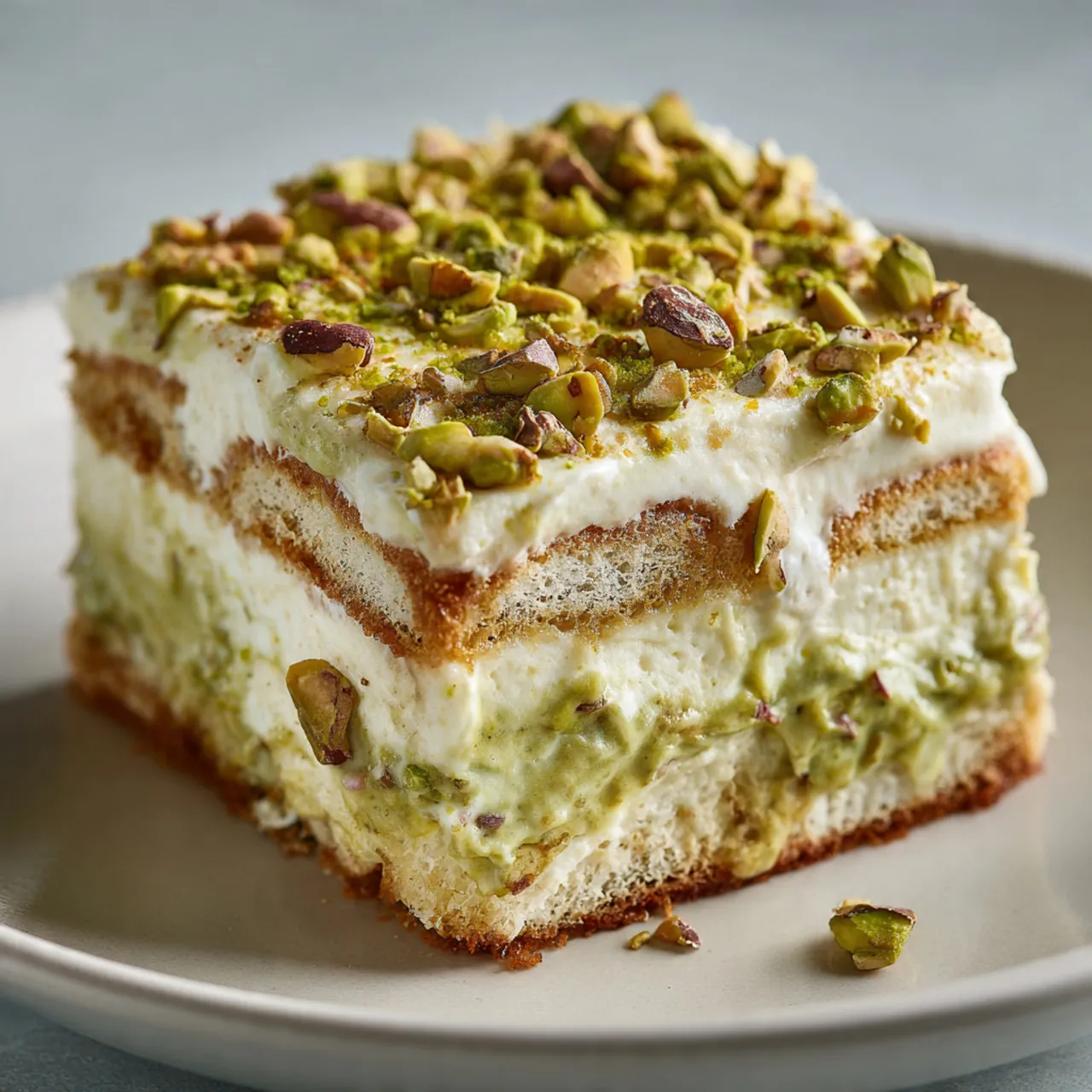
Pistachio tiramisu is a refined and indulgent twist on a beloved classic dessert. Known for its delicate balance of creamy textures and layered flavors, this version replaces traditional cocoa notes with the rich, nutty elegance of pistachios. The result is a dessert that feels familiar yet elevated, offering comfort alongside a touch of luxury.
At first glance, pistachio tiramisu is visually captivating. The soft layers of cream and cake are accented by pale green tones, while chopped pistachios scattered on top add texture and contrast. It is a dessert that invites attention before the first bite, signaling richness without heaviness.
The foundation of pistachio tiramisu remains true to traditional tiramisu structure. Layers of sponge or ladyfinger-style cake are gently soaked, then alternated with a smooth cream filling. What sets this version apart is the incorporation of pistachio paste or finely ground pistachios, which bring depth, color, and a subtly sweet nuttiness to the dish.
Pistachios have long been prized in desserts across many cultures. Their flavor is rich yet delicate, offering natural sweetness without overpowering other ingredients. In pistachio tiramisu, this balance is essential. The pistachio flavor enhances the cream rather than dominating it, allowing each layer to shine.
The cream layer is the heart of the dessert. Traditionally made with mascarpone, it is light, smooth, and luxurious. When blended with pistachio paste, the cream takes on a new character, becoming both earthy and elegant. The texture remains airy while the flavor gains warmth and complexity.
Cake layers play an equally important role. Soft sponge absorbs moisture from the cream and any light syrup used, creating cohesion between layers. The cake should be tender rather than dense, offering structure without competing with the cream. Each bite should feel balanced, never dry or heavy.
In many pistachio tiramisu variations, the soaking liquid is kept mild. Instead of strong coffee, a light syrup or subtly flavored liquid is used to complement the pistachio rather than overshadow it. This keeps the dessert gentle and approachable, even for those who prefer lighter sweets.
Texture is one of the most satisfying elements of pistachio tiramisu. The contrast between soft cake, creamy filling, and crunchy pistachio topping creates a layered experience. The chopped pistachios on top provide just enough bite to break through the smoothness beneath.
Chilling is a crucial step in preparing this dessert. Time in the refrigerator allows the layers to settle and flavors to meld. As it rests, the cake absorbs moisture evenly, and the cream firms slightly, resulting in clean slices and a cohesive structure.
When served cold, pistachio tiramisu feels refreshing despite its richness. The cream melts gently on the tongue, while the pistachio flavor lingers pleasantly. It is satisfying without being overwhelming, making it suitable for both special occasions and relaxed gatherings.
One of the strengths of pistachio tiramisu is its versatility. It can be prepared in large dishes for sharing or assembled into individual portions for elegant presentation. Either way, it maintains its charm and appeal.
This dessert often becomes a centerpiece at celebrations. Its appearance is refined, yet its flavors are comforting and familiar. It bridges the gap between traditional and modern, appealing to a wide range of tastes.
Pistachio tiramisu also reflects a growing appreciation for nut-based desserts. Nuts bring natural richness and complexity, allowing desserts to feel indulgent without relying solely on sugar. Pistachios, in particular, offer a unique combination of sweetness and earthiness that elevates the entire dish.
The topping of chopped pistachios is more than decorative. It reinforces the flavor theme while adding aroma and texture. Lightly toasted pistachios can enhance this effect, releasing oils that deepen the nutty scent and taste.
Color plays a subtle but important role in the appeal of pistachio tiramisu. The soft green hue suggests freshness and refinement. Combined with creamy whites and golden cake layers, the dessert feels balanced and visually soothing.
Despite its elegant appearance, pistachio tiramisu remains approachable. It does not rely on complicated techniques, but rather on quality ingredients and careful layering. This makes it accessible to home cooks while still feeling special.
Leftovers, if there are any, tend to be even better the next day. As the dessert rests longer, the flavors deepen and the texture becomes more unified. This makes pistachio tiramisu an excellent make-ahead option.
The emotional appeal of this dessert should not be underestimated. Like classic tiramisu, it carries a sense of comfort and indulgence. The pistachio variation adds a gentle twist that feels thoughtful and refined rather than experimental.
In many kitchens, pistachio tiramisu represents a bridge between tradition and creativity. It respects the structure of a classic dessert while allowing room for personal expression. Small adjustments in cream balance or pistachio intensity can tailor it to individual preference.
This dessert pairs beautifully with simple accompaniments. A cup of tea or light coffee enhances the experience without competing with the pistachio flavor. Served alone, it remains satisfying and complete.
Pistachio tiramisu also benefits from its universal appeal. It is rich but not heavy, sweet but not cloying, and elegant without being intimidating. These qualities make it a reliable choice for gatherings where diverse tastes are present.
In conclusion, pistachio tiramisu is a dessert that celebrates balance, texture, and subtle luxury. Its layers of cream and cake come together with the gentle richness of pistachios to create a dish that feels both comforting and refined.
Whether enjoyed as a special occasion dessert or prepared simply to savor at home, pistachio tiramisu offers a memorable experience. It proves that classic desserts can evolve gracefully, embracing new flavors while honoring their roots.