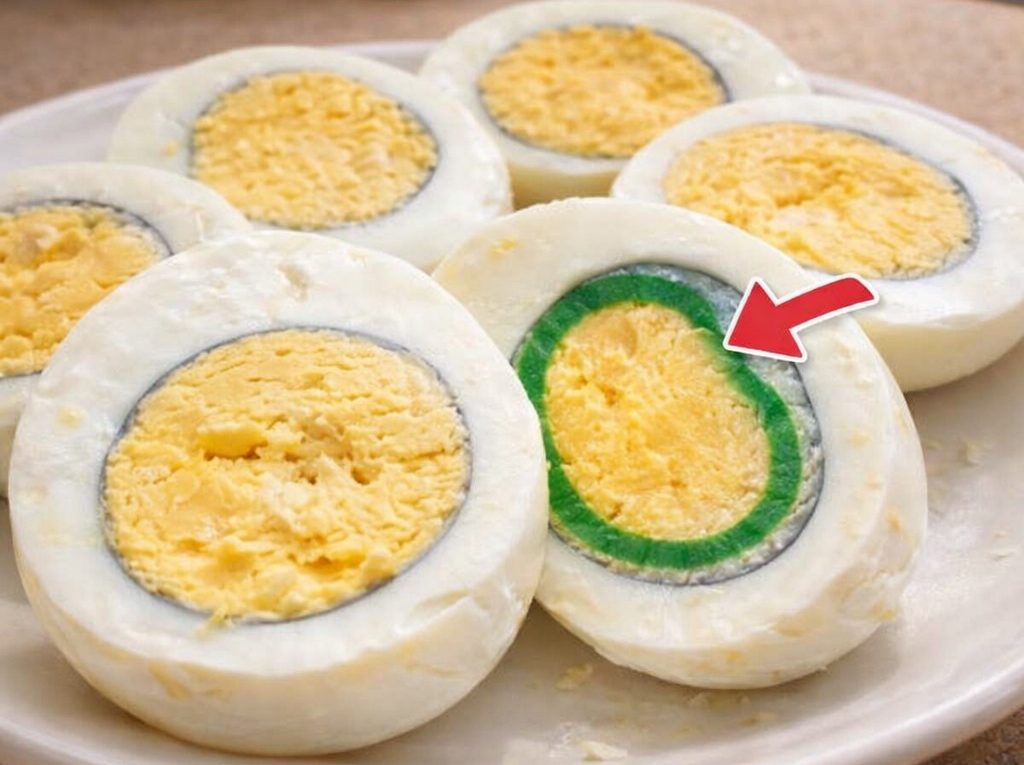
Hard-boiled eggs are a simple, nutritious, and versatile food enjoyed in many dishes around the world. However, sometimes when you cut open a hard-boiled egg, you may notice a green or grayish ring around the yolk. This unusual color can look surprising, and many people wonder whether the egg is still safe to eat.
The good news is that the green ring is completely harmless. It is simply the result of a natural chemical reaction that occurs during the cooking process.
The Science Behind the Green Ring
The green ring that sometimes appears around the yolk of a hard-boiled egg is caused by a reaction between sulfur and iron.
Egg whites contain sulfur, while egg yolks contain iron. When eggs are cooked for too long or at very high temperatures, the sulfur in the egg white reacts with the iron in the yolk. This reaction forms a compound called ferrous sulfide.
Ferrous sulfide is what creates the green or gray ring around the yolk.
Although it may not look very appealing, it does not affect the safety of the egg.
Is It Safe to Eat?
Yes, eggs with a green ring around the yolk are safe to eat. The color change is purely cosmetic and does not mean the egg has spoiled.
The taste and texture may be slightly different if the egg has been overcooked, but it is still perfectly edible.
However, many people prefer to avoid the green ring simply because it changes the appearance and sometimes makes the yolk a bit dry.
Why Eggs Get Overcooked
The most common reason for the green ring is overcooking. Leaving eggs in boiling water for too long or using extremely high heat increases the chances of the sulfur and iron reacting.
Another factor is slow cooling. If eggs remain hot for too long after cooking, the reaction can continue and increase the chance of the green discoloration.
Learning the correct cooking method can help prevent this effect.
How to Prevent the Green Ring
Preventing the green ring is actually quite simple with the right cooking technique.
Start by placing eggs in a pot and covering them with cold water. Bring the water to a gentle boil over medium heat. Once the water reaches a boil, remove the pot from the heat and cover it with a lid.
Let the eggs sit in the hot water for about 9 to 12 minutes depending on their size.
After the resting time, immediately transfer the eggs to a bowl of ice water or very cold water. Rapid cooling stops the cooking process and helps prevent the sulfur and iron reaction that forms the green ring.
Additional Tips for Perfect Hard-Boiled Eggs
Using slightly older eggs can make peeling easier after boiling. Fresh eggs tend to stick more to the shell.
Adding a small pinch of salt or a splash of vinegar to the water may also help reduce cracking during cooking.
Allowing eggs to cool completely before peeling can also make the process smoother.
With these simple techniques, you can enjoy perfectly cooked eggs with bright yellow yolks every time.
A Simple Kitchen Science Lesson
The green ring around a hard-boiled egg yolk is a great example of how chemistry works in everyday cooking. While it may look unusual, it is simply a harmless reaction caused by heat and natural compounds found in the egg.
By adjusting cooking time and cooling eggs quickly, you can easily prevent this discoloration and prepare hard-boiled eggs that look just as good as they taste.