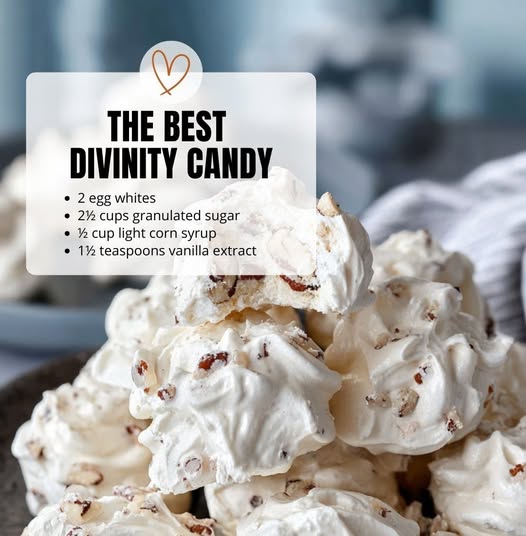
Divinity candy is one of those timeless treats that brings back memories of holidays, family gatherings, and cozy afternoons in the kitchen. With its light, snowy appearance and melt-in-your-mouth texture, divinity stands apart from other candies. It is sweet without being heavy, airy yet rich, and its delicate nature makes it feel truly special. While it may look elegant, making divinity is surprisingly approachable with the right techniques and patience.
At its heart, divinity is a candy made from sugar, egg whites, and corn syrup, whipped into a fluffy, marshmallow-like confection. The result is glossy, cloud-like pieces of sweetness that set with a slight chew and a tender interior. What sets divinity apart from other candies is its texture — it is neither a firm fudge nor a brittle, but something unique and irresistible.
One of the most appealing things about divinity is its simplicity in ingredients paired with complexity in texture. The core ingredients — sugar, corn syrup, egg whites, and vanilla — come together to create something far greater than the sum of its parts. As the sugar syrup reaches the correct temperature and is beaten together with the egg whites, air is incorporated, giving divinity its signature lightness and glossy sheen. The finished candy should be tender with a tiny bit of chew, not grainy or crumbly.
To make the best divinity candy, it starts with precision in cooking the sugar syrup. A heavy saucepan and a reliable candy thermometer are your best friends here. The sugar and corn syrup are combined with water and heated until the mixture reaches the soft-ball stage — about 240°F (115°C). This temperature is crucial because it determines the final texture of the candy. Too low and the divinity will be soft and sticky; too high and it can become hard and brittle.
While the sugar syrup is heating, egg whites are whipped to soft peaks. As the syrup reaches the proper temperature, it is slowly poured into the whipping egg whites in a steady stream. Mixing continuously as the hot syrup is added ensures that the heat sets the egg whites gradually, creating a stable, glossy meringue. What follows is a period of beating until the mixture thickens, holds its shape, and begins to cool slightly.
At this stage, additional flavorings and mix-ins can be folded into the divinity. Classic divinity is flavored with vanilla extract, which gives a warm, familiar sweetness. Chopped nuts such as pecans or walnuts are traditional additions that add texture and complexity. Some people enjoy a bit of almond extract or a swirl of finely chopped cherries for a festive twist. The key is to add these ingredients once the base mixture has thickened but before it begins to set.
Once the divinity mixture is ready, it is dropped by spoonfuls onto waxed or parchment paper. The individual pieces can be shaped into mounds, dollops, or even decorative swirls. As the candy cools, it sets into a firm exterior with a light, airy interior. The outside should be slightly crisp, giving way to a tender center that feels almost like a cloud of sweetness.
Divinity is often associated with holiday traditions, especially around Christmas. Many families have recipes that have been passed down through generations, and making divinity can become a cherished part of seasonal celebrations. The process itself — from heating the sugary syrup to seeing the glossy mixture transform — feels almost like a ritual, and the result is something worth sharing.
Because divinity does best in dry conditions, it is a candy that can be sensitive to humidity. On damp or rainy days, it can struggle to set properly. If the mixture remains sticky or refuses to firm up, it is often due to excess moisture in the air. This quirk adds a bit of challenge, but with persistence and careful timing, even novice candy makers can achieve success.
Serving divinity is as simple as arranging the pieces on a beautiful plate or in a candy dish. It pairs beautifully with coffee, tea, or a glass of cold milk. Because it is sweet and light, it works well alongside other desserts without overpowering them. Some people like to wrap individual pieces in cellophane as holiday gifts, creating a personal touch that friends and family appreciate.
Storage for divinity is straightforward but important. Once set completely, the pieces should be kept in an airtight container at room temperature. This prevents them from absorbing moisture and becoming sticky. Stored properly, divinity can stay fresh for several days, though it rarely lasts that long once placed within reach.
For those who enjoy experimenting in the kitchen, divinity also lends itself to variations. A touch of citrus zest can brighten the flavor, while miniature chocolate chips can add a playful contrast. Crushed peppermint candy on top gives a cool, festive note during winter holidays. These additions keep the classic base exciting and customizable.
Ultimately, the best divinity candy is not just about sweetness; it is about texture, technique, and tradition. Its soft, airy quality makes it a candy you can savor slowly or share with others. Whether you are making it for the first time or reviving a family recipe, divinity offers that rare combination of simplicity and sophistication.
Easy to make, delightful to eat, and lovely to share, divinity candy holds a special place in the world of confections. It celebrates the magic of transforming simple ingredients into something extraordinary, and every bite feels like a reminder of warmth, tradition, and the joy of good food.