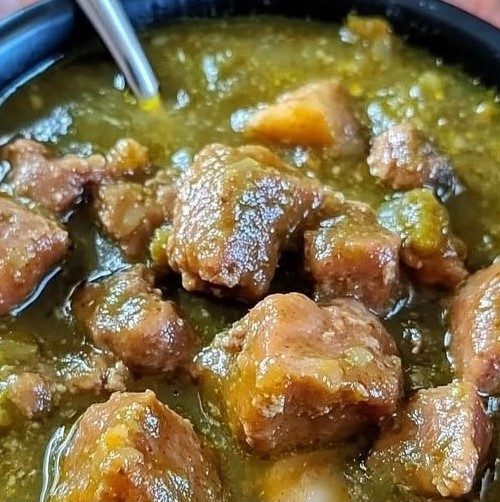
Authentic pork green chili is a deeply rooted dish that reflects the soul of Southwestern and Mexican-inspired home cooking. It is bold, hearty, and built on slow-simmered flavors that develop patiently over time. This is not a quick chili meant to rush through preparation, but rather a dish that rewards care, attention, and respect for traditional ingredients.
At the heart of pork green chili is the green chile itself. Roasted green chiles provide the signature flavor that defines the dish. Their earthy heat, smoky undertones, and gentle bitterness create a complex foundation that cannot be replicated with shortcuts. Hatch chiles are often considered the gold standard, though other New Mexico–style green chiles can also be used successfully.
Roasting the chiles is an essential step. The blistered skins are peeled away to reveal tender flesh beneath, intensifying the flavor while removing bitterness. This process brings depth and authenticity, forming the backbone of the chili’s character.
Pork is the ideal protein for green chili. Cuts such as pork shoulder or pork butt are preferred because they contain enough fat and connective tissue to become tender during long cooking. As the pork simmers, it absorbs the chile flavor while releasing richness into the broth.
The pork is typically cut into chunks rather than ground. This allows the meat to remain juicy and develop a satisfying texture. As it cooks slowly, the pork becomes fork-tender, contributing body and heartiness to the chili.
Aromatics play a supporting but important role. Onions are sautéed until soft, adding sweetness that balances the heat of the chiles. Garlic provides depth and warmth, enhancing the savory notes without overwhelming the dish.
Flour is sometimes used to lightly thicken authentic pork green chili. Stirred into the fat after browning the pork, it creates a subtle roux that gives the chili a slightly velvety texture. This technique results in a chili that is neither soupy nor overly thick, but perfectly spoonable.
Broth or water is added gradually, allowing the flavors to meld naturally. Pork broth or chicken broth is commonly used, though water alone can be sufficient when high-quality chiles and pork are used. The liquid should support the ingredients, not drown them.
Seasoning is deliberately restrained. Salt enhances the natural flavors, while black pepper adds gentle warmth. Cumin is sometimes included in small amounts, lending earthiness without overpowering the green chile profile. Authentic versions avoid heavy spice blends, allowing the chiles to lead.
As the chili simmers, the flavors deepen and harmonize. The pork softens, the chiles mellow, and the broth thickens slightly. This slow transformation is what defines authentic pork green chili and sets it apart from faster, modern adaptations.
The aroma during cooking is unmistakable. Roasted chiles, simmering pork, and savory aromatics fill the kitchen with warmth and anticipation. This sensory experience is a key part of the dish’s appeal.
Authentic pork green chili is traditionally served simply. Warm tortillas are a classic accompaniment, perfect for scooping or soaking up the sauce. Rice or beans may be served alongside, but the chili itself remains the focal point.
This dish is deeply tied to regional identity. In New Mexico and surrounding areas, green chili is more than food; it is part of cultural heritage. Families often have their own variations, passed down through generations and adjusted according to taste and tradition.
Texture is one of the defining qualities of pork green chili. The pork should be tender but intact, the sauce thick yet fluid, and the chiles evenly distributed throughout. Every spoonful should deliver balanced heat, richness, and depth.
Heat level can vary depending on the chiles used. Authentic green chili is not meant to overwhelm with spice, but rather to offer a steady warmth that builds gently. Adjusting the mix of mild and hot chiles allows cooks to tailor the dish without compromising authenticity.
Pork green chili improves with time. After resting, the flavors continue to develop, making leftovers especially satisfying. Reheated gently, the chili retains its texture and depth, often tasting even better the next day.
The dish is also versatile in how it is enjoyed. It can be eaten on its own, spooned over eggs for breakfast, or used as a topping for burritos, enchiladas, or potatoes. Despite these uses, the chili itself remains complete and satisfying without additions.
Authentic pork green chili reflects a philosophy of cooking rooted in patience and respect for ingredients. It relies on technique rather than shortcuts, flavor rather than excess, and tradition rather than trends.
For home cooks, this dish offers both challenge and reward. While the steps are straightforward, attention to detail makes a difference. Roasting chiles properly, choosing the right cut of pork, and allowing enough simmering time are all essential to achieving true depth of flavor.
This chili also represents communal cooking. Large batches are common, shared among family and friends, reinforcing its role as a dish meant to bring people together. It is filling, warming, and generous by nature.
In modern kitchens, authentic pork green chili remains relevant because it delivers comfort without compromise. It proves that bold flavor does not require complexity, only care and quality ingredients.
In conclusion, authentic pork green chili is a dish built on tradition, patience, and respect for flavor. Roasted green chiles, tender pork, and simple seasoning come together to create a chili that is rich, warming, and deeply satisfying.
Whether enjoyed with tortillas, served as a meal on its own, or shared with loved ones, authentic pork green chili offers more than nourishment. It delivers heritage, comfort, and a sense of place in every bowl.