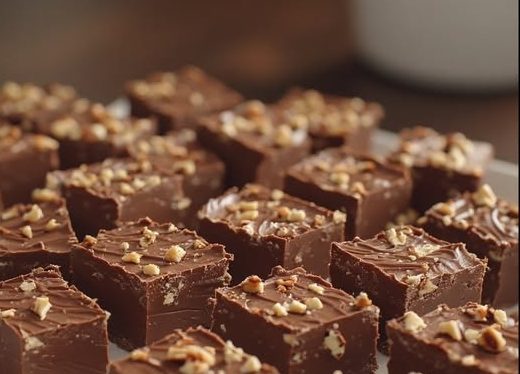
Mamie Eisenhower’s fudge is a classic American confection that carries both nostalgic charm and rich, creamy flavor. Known for its smooth texture and dependable results, this recipe has been passed down through generations as a reliable, no-fail fudge that anyone can make at home. It became especially popular during the 1950s, when Mamie Eisenhower, wife of President Dwight D. Eisenhower, shared it widely while serving as First Lady of the United States.
Mamie Eisenhower was well known for her love of home cooking and entertaining. During her years in the White House, she frequently shared her favorite recipes with the public, and her fudge quickly became one of the most famous. At a time when convenience foods were becoming more common, this fudge recipe stood out for its simplicity, consistency, and indulgent chocolate flavor. It reflected a balance between traditional homemade sweets and modern kitchen ease.
What makes Mamie Eisenhower’s fudge so special is its reliability. Unlike some fudge recipes that require precise candy thermometers or complex techniques, this version is forgiving and approachable. It relies on pantry staples and a straightforward cooking method that produces a smooth, creamy result every time. This dependability is one reason it remains popular decades later.
The texture of this fudge is one of its most appealing qualities. It is firm enough to cut cleanly into squares yet soft enough to melt gently in the mouth. The chocolate flavor is rich without being overpowering, making it appealing to both children and adults. When properly prepared, the fudge has a glossy finish and a velvety consistency that feels luxurious despite its humble ingredients.
Mamie Eisenhower’s fudge is often associated with holidays and special occasions. It has long been a favorite during Christmas, where it is wrapped in wax paper or arranged on cookie trays alongside other homemade sweets. Its simple elegance also makes it suitable for birthdays, bake sales, potlucks, and gift-giving. Because it holds its shape well, it travels easily and stores beautifully.
The preparation process is an important part of the recipe’s success. The sugar, milk, and butter are cooked together to create a smooth base, allowing the sugar to dissolve fully and blend evenly with the dairy. This step lays the foundation for the fudge’s creamy texture. Careful stirring ensures that the mixture does not scorch and that the ingredients combine properly.
Once the base reaches the correct stage, chocolate and marshmallow crème are added. The marshmallow crème plays a key role in stabilizing the fudge and giving it a soft, smooth structure. It also simplifies the process, eliminating the need for extended beating or temperature monitoring. This innovation was especially appealing in mid-century kitchens, where efficiency and consistency were highly valued.
Vanilla extract is added at the end to enhance the chocolate flavor and add warmth to the overall taste. Some versions also include chopped nuts, such as walnuts or pecans, which provide a pleasant crunch and contrast to the smooth fudge. Whether made with or without nuts, the recipe remains true to its original character.
One of the reasons Mamie Eisenhower’s fudge became so widely loved is its adaptability. While the original recipe focuses on chocolate, it can easily be adjusted to suit personal preferences. Variations using different types of chocolate, such as semi-sweet or dark, allow for subtle changes in sweetness and intensity. Some cooks even divide the batch and swirl in peanut butter or other flavors for a personalized touch.
Timing and patience are essential when making this fudge. Allowing it to cool properly before cutting ensures clean edges and a uniform texture. Rushing this step can result in soft or uneven pieces. Once set, the fudge can be sliced into small squares, making it ideal for sharing and portion control.
Storage is another advantage of this recipe. Mamie Eisenhower’s fudge keeps well at room temperature when stored in an airtight container, especially in cooler environments. It can also be refrigerated for longer storage without losing its texture. Many people believe the flavor improves slightly after a day, as the ingredients continue to meld together.
This fudge is more than just a sweet treat; it is a reflection of an era when homemade desserts were a symbol of care and hospitality. Sharing a pan of fudge was a way to connect with family, neighbors, and guests. Mamie Eisenhower’s willingness to share her recipe helped make it part of the American culinary tradition.
Today, this fudge continues to be made in kitchens across the country, often passed down through handwritten recipe cards and family stories. It evokes memories of simpler times, holiday gatherings, and the comforting ritual of stirring a pot on the stove. Even for those discovering it for the first time, it feels familiar and comforting.
Serving Mamie Eisenhower’s fudge can be as simple or elegant as you like. It can be arranged on a decorative plate, wrapped individually as gifts, or paired with coffee or tea for a casual dessert. Its classic appearance and rich flavor make it suitable for both everyday enjoyment and special celebrations.
In a world filled with elaborate desserts and trendy confections, Mamie Eisenhower’s fudge stands out for its timeless appeal. It does not rely on novelty or decoration to impress. Instead, it delivers consistent flavor, satisfying texture, and a sense of tradition that resonates with home cooks of all skill levels.
Mamie Eisenhower’s fudge remains a testament to the power of a good recipe shared generously. Its continued popularity proves that simplicity, when done well, never goes out of style. Whether made for a holiday, a gift, or a quiet moment of indulgence, this classic fudge continues to bring comfort and joy, just as it did decades ago in the White House and beyond.