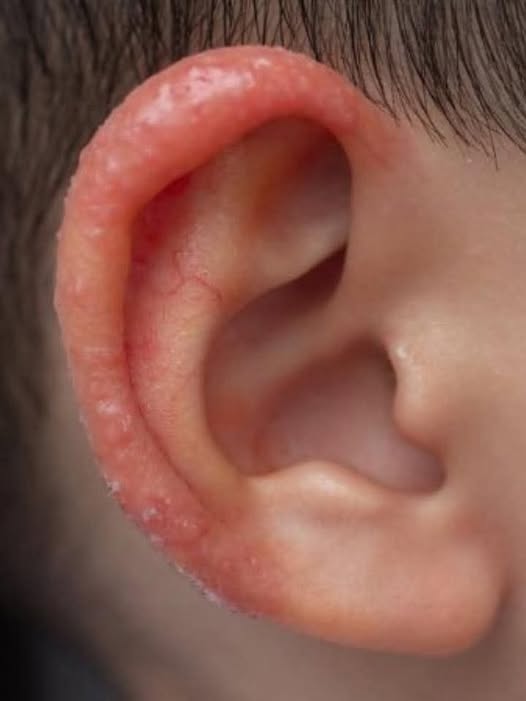
Here’s what you can do right now.
First, take a close look and note details
Try to observe and even take a clear photo today so you can compare it over the next few days. Notice:
– Color (red, pink, brown, white, scaly, shiny)
– Texture (dry, crusty, flaky, swollen, smooth)
– Size and shape
– Whether it’s painful, itchy, oozing, or bleeding
Changes over time matter more than how it looks at a single moment.
Second, keep the area clean and dry
Gently clean the ear with lukewarm water and a mild, fragrance-free soap once a day. Pat it dry carefully. Avoid scrubbing, picking, or peeling the skin, even if it looks flaky or crusted.
Third, avoid new products or home remedies
Do not apply essential oils, alcohol, hydrogen peroxide, or strong creams. These can irritate the skin and make it harder for the doctor to assess later.
If the skin looks dry or cracked, a thin layer of plain petroleum jelly can help protect it. Use only a small amount.
Fourth, watch for signs of infection or urgency
Seek medical care sooner (urgent care or a same-day clinic) if you notice:
– Rapid spreading redness
– Swelling that worsens
– Warmth, pus, or yellow crusting
– Fever
– Increasing pain or tenderness
– The ear becoming very red and stiff
– Your child acting unusually tired, irritable, or unwell
These signs suggest infection and shouldn’t wait a week.
Fifth, protect the ear
If your child is outside, protect the ear from sun, wind, and cold. Avoid tight hats, helmets, or headphones that rub the area. If the change may be from friction or pressure, minimizing contact can help calm it.
Sixth, don’t panic about common causes
Many ear skin changes in children turn out to be things like mild eczema, contact irritation, insect bites, dry skin, or minor infections. These often look alarming but are not serious when caught early.
Seventh, prepare for the doctor visit
Bring the photo(s), note when you first noticed the change, and mention:
– Any itching or pain
– Recent illness
– New soaps, shampoos, hats, or swimming
– Any history of eczema, allergies, or skin issues
That information helps the doctor diagnose quickly.
Right now, your best move is gentle care, no experimentation, and close observation. If anything worsens or new symptoms appear, don’t wait for the scheduled visit. If you’d like, you can describe what the skin change looks like (color, size, texture), and I can help you think through what’s more urgent versus what can safely wait.