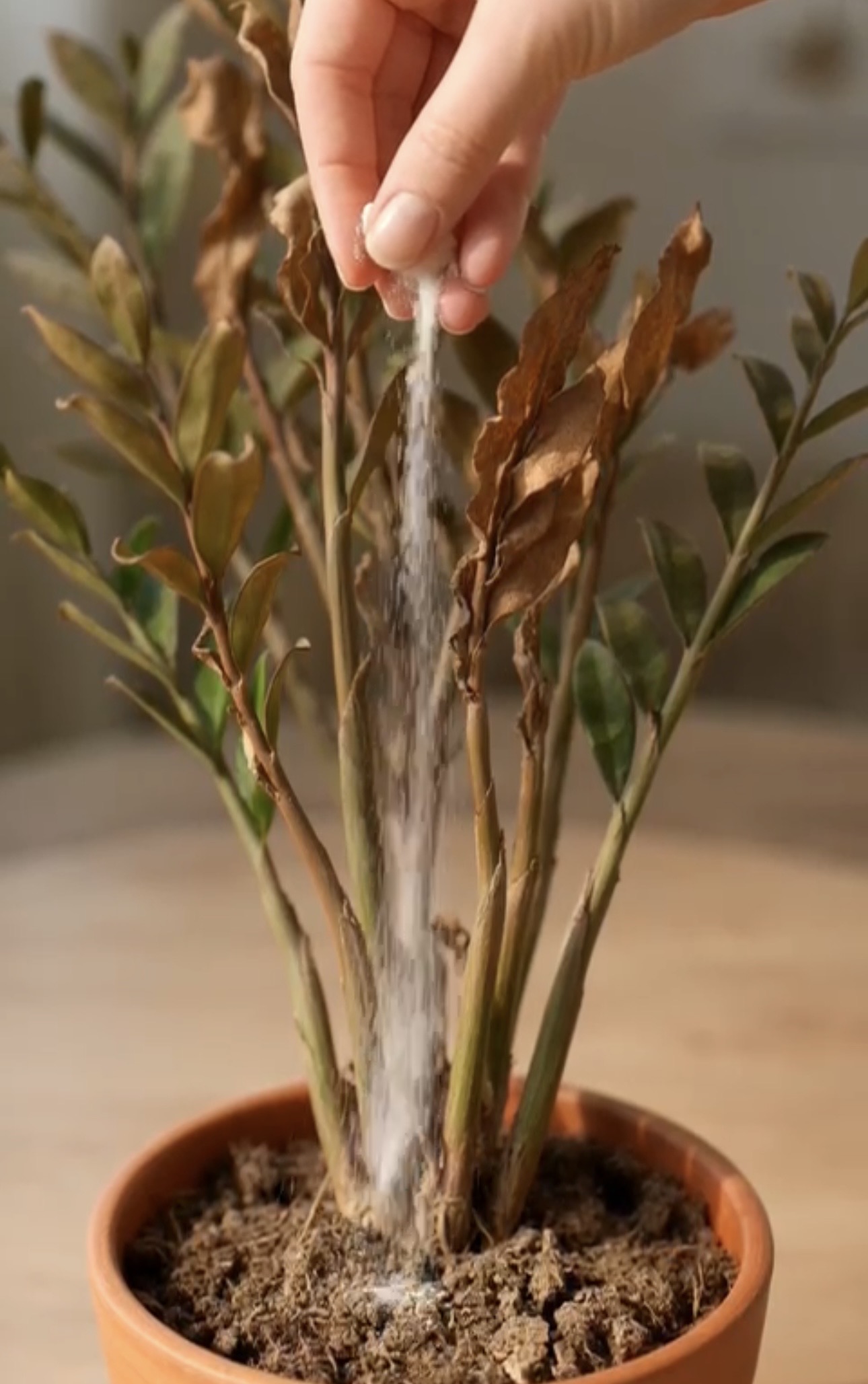
If you have ever looked at your favorite houseplant and thought, “Well… this might be the end,” you are definitely not alone. One week it looks calm and green in the corner of the room, and the next week the leaves are brown, dry, curling, and hanging there like they have already given up on life.
It is frustrating, especially when you have been watering it, moving it closer to light, or even talking nicely to it like a tiny leafy roommate. Sometimes a struggling plant does not need a dramatic rescue plan. It just needs the right care, a little patience, and a simple adjustment to the soil.
That is why so many plant lovers are curious about easy home plant care tricks, especially when a common white powder is involved. Depending on the plant and the situation, certain natural soil helpers can support healthier growth, improve drainage, or gently correct conditions that may be stressing the roots. But the truth is important here: no white powder is magic on its own. A dying plant usually needs full plant care support, not just one quick sprinkle and a miracle.
Still, when used the right way, a simple soil amendment can become part of a smart indoor plant recovery routine. In this article, we will look at what may be happening when your plant develops brown leaves, why the soil matters so much, how a white powder treatment may help in some cases, and the safest way to approach plant revival at home.
Why Indoor Plants Start Turning Brown and Dry
Before adding anything to the pot, it helps to understand what your plant may be trying to tell you.
Brown leaves are not one single problem. They are a symptom. And houseplants love symptoms. They never just say, “Hello, I need less water.” No, they prefer mystery.
A plant may start drying out or browning because of underwatering, overwatering, poor drainage, root rot, compacted soil, too much direct sunlight, low humidity, pest stress, salt buildup, or nutrient imbalance. In some cases, it is not even the leaves themselves that are the real issue. The roots may be struggling long before the damage appears above the soil line.
This is why random treatments do not always work. If a plant is getting brown leaves from soggy roots, adding more water will make it worse. If it is drying out from harsh sun and dry indoor air, feeding it heavily will not solve the real problem either.
A struggling plant needs observation first. Look at the leaf texture. Are the leaves crispy or mushy? Is the soil dry like dust or wet and dense? Does the pot drain properly? Is the plant near a heater, strong sun, or a cold draft?
These details matter more than people think.
What the White Powder Might Be in Plant Care
When people talk about using a white powder for plants, they may be referring to different things. Some use baking soda for surface plant issues, some use cinnamon for cuttings and fungal concerns, some use powdered soil conditioners, and some use crushed natural mineral products to improve soil quality.
The important part is that not every white powder belongs in every pot.
In general, plant-safe powders used in home gardening are usually meant for one of these purposes:
- supporting soil balance
- reducing excess moisture problems on the surface
- discouraging certain fungal conditions
- improving the growing environment around the roots
- helping with transplant recovery in some situations
But a healthy warning is needed here. Overusing home remedies can damage plants. Too much powder added directly to the soil may change the pH too much, create crusting, or stress delicate roots. Indoor plant care works best when it is gentle, simple, and based on what the plant actually needs.
The Real Secret: Soil Health Comes First
If your plant is weak, dropping leaves, or showing dry brown edges, the soil is one of the first things to check.
Many indoor plants sit in the same potting mix for too long. Over time, soil becomes compacted. It stops draining well. Air cannot move properly around the roots. Water either runs straight through too fast or stays trapped for too long. Neither situation is great.
Healthy roots need three basic things: moisture, oxygen, and room to function. When soil becomes heavy and tired, roots struggle. Once roots struggle, leaves begin to fail.
This is where certain plant care powders or amendments may help as part of a bigger recovery plan. If the goal is to refresh the soil environment, improve drainage conditions, or support cleaner root-zone care, then a simple treatment may have value. But it works best alongside proper repotting, watering correction, and trimming away damaged leaves.
Think of it like this: if a plant is already exhausted, a powder alone is not the rescue. It is just one helpful teammate.
Signs Your Plant May Need More Than a Quick Fix
Sometimes a plant can recover with a small correction. Other times, it needs a full reset.
Here are common signs that your houseplant needs more than a simple top treatment:
- several stems are soft or weak at the base
- the soil smells sour or musty
- leaves are dropping quickly
- roots are black, mushy, or tangled tightly around the pot
- the pot has poor or no drainage
- pests are visible on leaves or stems
- the plant has not produced healthy new growth in a long time
If you notice more than one of these signs, it is usually time to remove the plant from the pot and inspect the roots. That may sound dramatic, but honestly, it is often the moment when the truth comes out.
From above, the plant looks “a little sad.” Underneath, it looks like it has been fighting for its life.
How to Safely Help a Dying Plant Recover
If your plant has dry brown leaves and seems weak, a safe recovery routine is usually more effective than trying random remedies one after another.
Start by removing the fully dead leaves. These will not turn green again, and leaving too much dead material on the plant can make it harder to see new progress. Use clean scissors and only trim what is clearly gone.
Next, check the soil. If it is bone dry and pulling away from the pot edges, the plant may be severely dehydrated. If it is wet, dense, and cold, it may be holding too much moisture. Both situations need different solutions.
If the plant is rootbound or stuck in poor soil, repot it into fresh indoor potting mix. Choose a pot with drainage holes. This matters more than fancy plant products. A beautiful pot without drainage may look cute on a shelf, but your roots may be planning a complaint letter.
After repotting, place the plant in bright indirect light. Most struggling indoor plants do not want intense direct sun while recovering. They want stable, gentle conditions.
Then adjust your watering routine. Water only when appropriate for the plant type and the soil condition. Not on a fixed emotional schedule.
Can a White Powder Treatment Actually Help?
Yes, in some cases, but only as part of proper plant care.
A light powder treatment may help when the issue involves surface moisture imbalance, mild fungal concern, or a soil condition that benefits from a safe amendment. Used properly, it can support the environment around the plant. Used carelessly, it can create new problems.
This is why moderation is everything.
If you are using a plant-safe household remedy, research the specific purpose first. Make sure it is suitable for indoor plants, appropriate for that species, and not likely to burn roots or alter the soil too aggressively. It is always better to use a small amount than too much.
When people get excited about plant rescue tips online, they sometimes treat the soil like soup and start adding everything at once. Powder, peel water, coffee grounds, crushed shells, mystery tea, kitchen leftovers… and suddenly the plant is not in recovery anymore. It is in a science experiment.
Simple is better.
Best Indoor Plant Care Habits for Long-Term Health
Once your plant starts recovering, the goal is to keep it healthy instead of waiting for the next emergency.
The best indoor plant care habits are not complicated, but they do need consistency.
Use the Right Light
Most common houseplants prefer bright indirect light. Too little light weakens growth, while harsh direct sun can burn leaves. Watch how your plant responds in its spot for a couple of weeks before making big changes.
Water Based on Need
Different plants need different watering rhythms. Always check the soil first. The top layer may look dry while deeper soil is still moist. Watering based on appearance alone can lead to overwatering fast.
Improve Drainage
A healthy potting mix and a pot with drainage holes are essential. If water cannot escape, roots sit in moisture too long. That is one of the fastest ways to stress an indoor plant.
Clean Up Dead Growth
Removing dead leaves and weak stems helps the plant focus on healthier parts. It also improves airflow and makes it easier to spot pests or disease early.
Avoid Overfeeding
A weak plant is not always a hungry plant. Too much fertilizer can make a stressed plant worse. Let the roots recover before pushing new growth too hard.
When Patience Matters More Than Products
One of the biggest mistakes in plant care is expecting instant results.
A brown leaf will not become green again overnight. A damaged stem may not recover at all. But if the roots improve and the plant starts putting out healthy new growth, that is the real sign of success.
Plant recovery is often slow. Very slow. The kind of slow that makes you stare at the same leaf for three days trying to decide whether it looks “slightly less tragic.”
Still, slow progress is progress.
If you correct the soil, improve drainage, give proper light, and use supportive treatments carefully, your plant has a real chance. Some plants bounce back beautifully once their roots are happier. Others may lose old leaves but produce fresh, healthy growth from the center or base.
Do not judge the whole recovery by the oldest damaged leaves. Look for new life.
A Smart Way to Think About Natural Plant Remedies
Natural plant care can be useful, especially for people who enjoy simple home gardening methods. But the best results come from using natural remedies as support, not as magic.
A white powder treatment may be one helpful step for a struggling plant, especially if the soil environment needs correction. But true plant revival usually comes from a full care approach: healthy roots, balanced watering, better light, clean trimming, and patience.
That combination is what brings indoor plants back from the edge.
So if your plant is dry, brown, and looking tired, do not panic. Start with the basics. Check the roots. Refresh the soil. Improve the environment. Be gentle with any powder or amendment you use. And give the plant time to respond.
Sometimes the comeback is surprisingly beautiful.
And sometimes your plant survives just enough to remind you that it is dramatic, not dead.
Final Thoughts
A dying houseplant can look hopeless, but many plants recover when the real problem is identified early. Brown leaves, dry stems, and weak growth often point to stress in the soil or root system, not just a surface issue. That is why a simple white powder plant treatment may help in some situations, but it should always be used thoughtfully and as part of a complete indoor plant care routine.
Focus on the foundation: clean soil, proper drainage, balanced watering, bright indirect light, and careful observation. These are the habits that support strong roots and healthier leaves over time.
When you treat the cause instead of only the symptom, your plant has a much better chance to recover and grow again.
If you want, I can also turn this into a more viral Facebook-style article version or make it sound more professional/natural-health blog style.