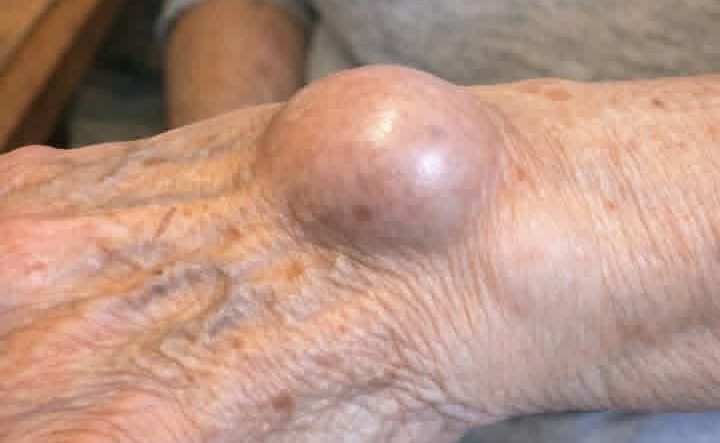
My grandmother developed this strange lump on her wrist overnight. What could this be? I am worried because it looks abnormal.
It can be frightening to notice a sudden lump on the body of someone you love — especially when it appears overnight. Many people immediately think of the worst-case scenario, but in reality, most wrist lumps (particularly in older adults) turn out to be benign and treatable conditions. Still, because appearance alone is not enough to diagnose a lump, it is important to understand the possible causes and when to seek medical care.
This article explains the most common medical reasons a lump can suddenly appear on the wrist, what symptoms to watch for, and when it might require urgent attention.
First — Don’t Panic
A sudden bump on the wrist looks alarming because:
- The wrist has very little fat, so any swelling becomes very visible
- The tendons and joints are close to the skin
- The size can change quickly due to fluid
In older adults, the most common causes are not cancer. In fact, doctors report that the majority of wrist lumps they examine are harmless growths, cysts, or inflammation related to joints and tendons.
However, ignoring it is also not recommended.
The Most Likely Cause: Ganglion Cyst
The number one reason for a sudden wrist lump — especially one that appears almost overnight — is a ganglion cyst.
What is a Ganglion Cyst?
A ganglion cyst is a fluid-filled sac that forms from the joint capsule or a tendon sheath. The fluid inside is similar to joint lubrication (synovial fluid).
It commonly appears:
- On the back of the wrist
- Near the thumb side
- Sometimes on the palm side
Why it appears suddenly
The cyst is not actually forming overnight.
It usually develops slowly inside the joint, but once enough fluid collects, it pushes outward and suddenly becomes visible.
So to you, it looks like it appeared in one night — but medically, it has been forming for some time.
Typical features
- Round or oval shape
- Firm but slightly movable
- Smooth surface
- May change size during the day
- Sometimes disappears and returns
- Usually painless (but not always)
Older adults often discover it while:
- Waking up
- Washing hands
- Wearing a watch
- Moving the wrist
Is It Dangerous?
In most cases, no.
Ganglion cysts are benign.
They are not cancerous and do not spread.
However, they can:
- Press on nerves
- Cause discomfort
- Limit wrist movement
- Create weakness when gripping objects
If it presses a nerve, your grandmother might feel:
- Tingling
- Burning
- Numbness in fingers
- Weak grip
This is uncomfortable but still usually not life-threatening.
Other Possible Causes of a Wrist Lump
While ganglion cysts are the most common, doctors also consider other medical conditions.
1. Arthritis-related swelling
Older adults often have osteoarthritis.
Joint inflammation can create a visible swelling that looks like a lump.
Signs include:
- Morning stiffness
- Pain when moving wrist
- Reduced flexibility
- Bony hard feeling
These are called bony nodes or joint enlargement.
2. Tendon sheath swelling (Tenosynovitis)
Tendons move through protective sleeves. When inflamed, fluid builds up and creates a bulge.
Causes:
- Repetitive hand use
- Aging tendons
- Minor unnoticed injury
Symptoms:
- Tenderness
- Pain when moving fingers
- Warmth around the lump
3. Lipoma (fatty lump)
A lipoma is a soft, fatty growth under the skin.
Features:
- Very soft
- Moves easily
- Usually painless
- Slow growing
Lipomas are harmless and extremely common in seniors.
4. Hematoma (small internal bruise)
Older adults have fragile blood vessels.
A minor bump (even unnoticed) can cause bleeding under the skin.
Signs:
- Purple or bluish color
- Tenderness
- Appears suddenly
This can look dramatic but often heals naturally within days.
5. Infection (rare but important)
This is uncommon but requires urgent attention.
Watch for:
- Redness
- Warm skin
- Fever
- Rapid growth
- Severe pain
This could be an abscess or infected joint and needs immediate medical care.
6. Tumors (very uncommon)
This is what people fear most, but it is statistically rare.
Red flags:
- Rock-hard lump
- Fixed in place
- Rapid enlargement
- Skin ulceration
- Night pain
- Weight loss
These symptoms should be evaluated quickly by a physician.
When Should You See a Doctor?
You should arrange a medical check if:
- The lump lasts more than 2 weeks
- It keeps growing
- It becomes painful
- There is numbness in fingers
- The hand becomes weak
- Skin changes color
- Fever appears
Even if it is likely a cyst, doctors usually confirm with a simple exam.
How Doctors Diagnose It
A doctor may:
- Examine the wrist
- Shine a light through the lump (ganglion cysts transmit light)
- Order an ultrasound
- Rarely, request an MRI
These tests are painless and quick.
Treatment Options
Treatment depends on the cause.
For Ganglion Cyst
Many require no treatment.
Options include:
Observation
- Many disappear on their own
Immobilization
- Wrist brace reduces fluid production
Aspiration
- Doctor drains fluid with a needle
- Quick outpatient procedure
Surgery
- Only if painful or recurring
Important:
Do NOT try home remedies like hitting it with a heavy object. This old myth can damage tendons and bones.
For Arthritis
- Anti-inflammatory medication
- Hand therapy
- Warm compresses
For Infection
- Antibiotics
- Sometimes drainage
For Lipoma
- Usually no treatment needed
Home Care Until the Appointment
You can safely do:
- Rest the wrist
- Avoid heavy lifting
- Apply a cool compress 10–15 minutes
- Elevate hand when resting
Avoid:
- Popping it
- Massaging hard
- Needles
- Herbal burning remedies
Why It Looks So Scary
The wrist has:
- Thin skin
- Visible tendons
- Prominent bones
Even a small cyst appears dramatic. Many families panic, but doctors see this condition daily.
In elderly patients, ganglion cysts are one of the most frequent reasons for visiting a hand clinic.
Key Takeaway
A sudden wrist lump in an older adult is most commonly a ganglion cyst or joint-related swelling, not a dangerous disease. However, only a healthcare professional can confirm the diagnosis.
The safest approach:
- Monitor for a few days
- Watch for warning signs
- Schedule a medical check
Early evaluation gives peace of mind and ensures proper treatment if needed.
Final Advice
Your concern is understandable. Sudden body changes in elderly family members are worrying. Fortunately, in the majority of cases, wrist lumps are benign and manageable.