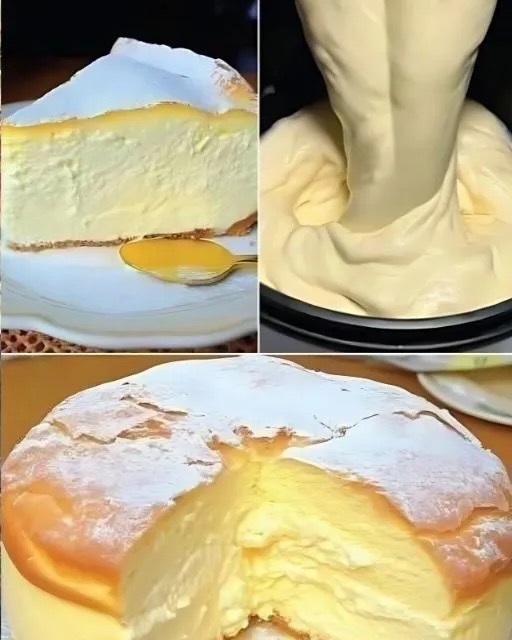
Japanese soufflé cheesecake is a dessert that feels almost magical the first time you taste it. Light as air, gently sweet, and delicately creamy, it sits somewhere between a classic baked cheesecake and a soft sponge cake. Unlike dense Western-style cheesecakes, this Japanese version relies on whipped egg whites to create its signature cloud-like texture. The result is a cake that jiggles slightly when you move it, melts in your mouth, and never feels heavy.
This style of cheesecake became popular in Japan in the late twentieth century, inspired by European cheesecakes but adapted to Japanese preferences for lighter desserts. Over time, it has become a beloved bakery staple and an internet sensation thanks to its dramatic rise in the oven and its unmistakable wobble. While it may look intimidating, Japanese soufflé cheesecake can absolutely be made at home with patience and a little attention to technique.
What makes Japanese soufflé cheesecake special
The key difference lies in the method. Cream cheese, butter, and milk form a smooth base, while whipped egg whites folded in at the end provide lift. Baking the cake in a water bath allows gentle, even heat, preventing cracks and helping the cheesecake rise without drying out. Once cooled, the cake settles slightly, creating an ultra-soft interior that feels almost like a custard-infused sponge.
Flavor-wise, it is subtly sweet and mildly tangy. The cream cheese shines without overpowering the palate, making it perfect on its own or with simple accompaniments like fresh berries, whipped cream, or a light dusting of powdered sugar.
Ingredients
For the cheesecake:
250 g cream cheese, softened
50 g unsalted butter
100 ml whole milk
6 large eggs, separated
120 g granulated sugar, divided
60 g cake flour
20 g cornstarch
1 tablespoon lemon juice
1 teaspoon vanilla extract
1/4 teaspoon salt
Optional topping:
Powdered sugar for dusting
Fresh berries or whipped cream
Equipment needed
A 20 cm round springform pan
Parchment paper
Aluminum foil
Electric mixer or stand mixer
Large roasting pan for the water bath
Preparation steps
Preheat your oven to 160°C. Line the bottom of the springform pan with parchment paper and lightly grease the sides. Wrap the outside of the pan tightly with aluminum foil to prevent water from leaking in during baking.
In a heatproof bowl, combine the cream cheese, butter, and milk. Place the bowl over a pot of gently simmering water and stir until everything is melted and smooth. Remove from heat and let it cool slightly.
Add the egg yolks to the cream cheese mixture one at a time, mixing well after each addition. Stir in the lemon juice and vanilla extract.
Sift the cake flour and cornstarch together. Gradually add them to the batter, mixing gently until smooth and lump-free. Set aside.
In a clean bowl, beat the egg whites with salt until foamy. Gradually add the remaining sugar in three additions, beating until soft, glossy peaks form. The meringue should be smooth and flexible, not stiff or dry.
Fold one-third of the meringue into the cream cheese batter to lighten it. Then gently fold in the remaining meringue in two additions, using a spatula and light motions to preserve as much air as possible.
Pour the batter into the prepared pan and gently tap it on the counter to release large air bubbles.
Place the pan into the larger roasting pan and pour hot water into the roasting pan until it reaches about halfway up the sides of the cheesecake pan.
Baking and cooling
Bake at 160°C for 25 minutes, then lower the temperature to 140°C and continue baking for another 40 to 50 minutes. The cake should rise beautifully and develop a light golden top.
Once baked, turn off the oven and leave the door slightly open. Let the cheesecake cool inside the oven for about one hour. This gradual cooling helps prevent sudden shrinkage and cracking.
Remove the cake from the oven and water bath. Let it cool completely at room temperature before removing it from the pan. For best texture and flavor, refrigerate the cheesecake for at least two hours before serving.
Serving suggestions
Japanese soufflé cheesecake is wonderful served chilled or at cool room temperature. A light dusting of powdered sugar is traditional and highlights its simplicity. Fresh strawberries, blueberries, or raspberries add a pop of color and gentle acidity. For a café-style presentation, serve slices with lightly sweetened whipped cream and a cup of green tea or coffee.
Tips for success
Room temperature ingredients are essential for a smooth batter. Cold cream cheese can create lumps that are difficult to remove.
Do not overbeat the egg whites. Soft peaks are crucial for a tender texture. Overwhipped meringue can cause cracks and uneven rising.
Always use a water bath. Skipping this step can result in a dry texture and uneven baking.
Be patient during cooling. Rapid temperature changes can cause the cheesecake to collapse dramatically.
Why this cheesecake is worth the effort
Japanese soufflé cheesecake is more than just a dessert; it is an experience. From watching it rise in the oven to seeing its gentle jiggle when sliced, every step feels rewarding. Its lightness makes it ideal after a heavy meal, and its balanced flavor appeals to both cheesecake lovers and those who usually find cheesecake too rich.