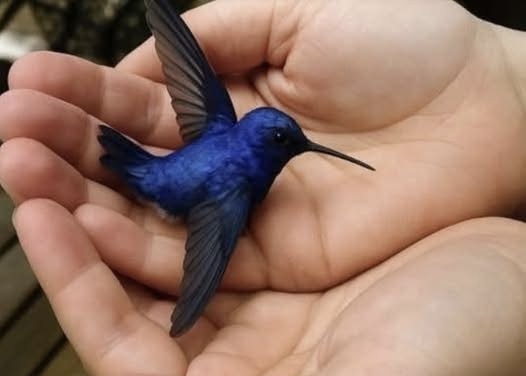
The sight of a blue hummingbird resting gently in the palm of a hand is nothing short of breathtaking. These remarkable birds, often compared to flying gemstones, capture the imagination with their dazzling colors, delicate size, and extraordinary agility. With feathers shimmering like sapphire under sunlight, the blue hummingbird stands among the most enchanting creatures in the natural world—a reminder of how small wonders can hold enormous beauty.
Hummingbirds are already known for their vibrant colors and impressive flight abilities, but the blue varieties possess a magic all their own. Their feathers reflect light in shifting shades of royal blue, indigo, and violet, making them appear almost unreal—like something from a dream or a storybook. Holding such a tiny bird in the hand emphasizes both its fragility and its strength, as these miniature creatures are capable of incredible endurance, long migrations, and rapid wingbeats unmatched by any other bird.
Tiny Yet Extraordinary
Despite their small size—often weighing no more than a few grams—hummingbirds rank among the most astonishing flying animals on Earth. Their wings beat up to 80 times per second, creating the iconic buzzing hum that gives them their name. They can hover, fly backward, dart sideways, and reach speeds rivaling much larger birds. This agility makes their presence magical, especially when seen up close.
A blue hummingbird resting in human hands offers a rare glimpse at stillness from a bird known for constant motion. Its tiny claws curled, wings lightly folded, and heartbeat fluttering rapidly beneath its feathers—every detail highlights just how remarkable and delicate this species truly is.
A Flash of Sapphire in the Wild
Blue hummingbirds are native to lush habitats such as rainforests, tropical forests, and flower-dense regions of the Americas. Places rich with nectar-producing blossoms provide the perfect environment for these energetic birds. Their brilliant coloring helps them blend into floral landscapes while still catching the eye of anyone fortunate enough to spot them.
Unlike most birds, hummingbird colors come not from pigment but from iridescence—microscopic structures in their feathers reflect sunlight in dazzling hues. Depending on the angle of light, a single feather can shift from deep blue to purple or even black. This optical effect gives the bird its gem-like quality, making every move shimmer like silk.
A Symbol of Hope, Freedom, and Resilience
Throughout cultures around the world, hummingbirds symbolize joy, motion, energy, and resilience. Their ability to hover in place reflects balance and presence, while their long migrations represent endurance and strength. Seeing a hummingbird up close—especially one as vivid as this—often feels like a moment of connection with nature’s deeper meanings.
Their coloration is also symbolic. Blue often represents peace, serenity, and inspiration. A blue hummingbird evokes calm beauty while reminding us that even the smallest creatures can dazzle the senses and uplift the spirit.
A Reminder to Protect Nature
Holding one of these tiny treasures reinforces how fragile wildlife is. Hummingbirds rely on delicate ecosystems, including flowering plants, clean water sources, and safe shelter. Habitat loss, climate shifts, and declining flower populations place pressure on hummingbird species throughout the Americas.
Moments like this—when a bird rests trustingly in human hands—serve as gentle reminders of our responsibility to protect the natural world. Planting nectar flowers, preserving green spaces, and supporting conservation efforts all help ensure hummingbirds continue to thrive for generations.
A Magical Encounter Worth Cherishing
Few experiences compare to seeing a blue hummingbird up close. Their iridescent feathers, rapid heartbeat, and graceful presence inspire awe and appreciation. Whether caught in flight or gently cradled in the palm, they highlight the wonder that exists in everyday nature.
In a world filled with large-scale achievements and grand spectacles, the blue hummingbird reminds us that beauty often comes in the smallest packages. It invites us to pause, look closer, and recognize that even tiny lives contribute vibrantly to Earth’s tapestry.
A single bird, resting quietly for a moment before taking flight again, leaves a lasting impression—colorful, delicate, and unforgettable.