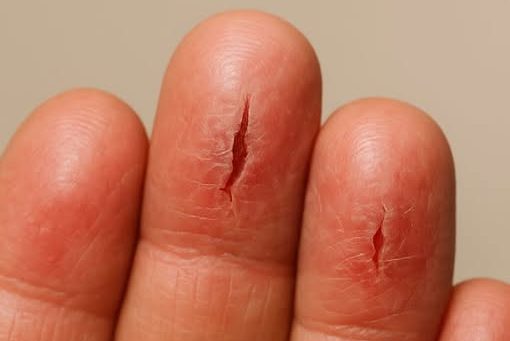
Painful fingertip cracks are very common in cold, dry weather, and there are several things you can do right now to help them heal and prevent them from getting worse. This is general self-care advice, not a diagnosis, but it can make a real difference while you wait to see a doctor.
First, protect the skin barrier as much as possible. Cold air, wind, and frequent handwashing strip natural oils from your skin. When you go outside, wear warm gloves, even for short trips. At home, avoid hot water on your hands, since it dries skin further. Use lukewarm water instead, and keep washing brief.
Moisturizing correctly is more important than how often you moisturize. Thin lotions usually are not enough for cracked fingertips. Use a thick ointment or cream with ingredients like petroleum jelly, petrolatum, lanolin, shea butter, or ceramides. Apply it immediately after washing your hands, while the skin is still slightly damp, to lock in moisture.
At night, do intensive repair. Before bed, apply a generous layer of a thick ointment to your fingertips, then cover them with cotton gloves or even clean socks over your hands. This creates a humid environment that helps cracks close and heal overnight. Doing this consistently for several nights can make a big improvement.
If the cracks are deep or painful, you can seal them temporarily. A liquid bandage or skin-safe cyanoacrylate adhesive (often sold for cracked skin) can help close the split and reduce pain while it heals. Make sure the area is clean and dry before applying. Do not use regular household glue.
Reduce irritation during the day. If you use cleaning products, do dishes, or work with water, wear protective gloves. If gloves trap moisture inside, wear thin cotton liners underneath. Avoid fragranced soaps, hand sanitizers with strong alcohol, or products that sting when applied, as these slow healing.
For inflammation or redness, a short course of over-the-counter hydrocortisone cream can help calm irritation. Use it once or twice daily for a few days only, then stop. Always apply moisturizer on top after it absorbs.
Stay hydrated and consider indoor humidity. Drinking enough water supports skin health, and using a humidifier at home can reduce dryness caused by heaters and cold air.
Watch for signs that need medical attention. Seek care sooner if you notice increasing redness, warmth, swelling, pus, spreading pain, fever, or red streaks from the cracks. These can indicate infection. Also see a doctor if the cracking keeps returning despite good care, or if you have conditions like eczema, psoriasis, diabetes, or circulation problems.