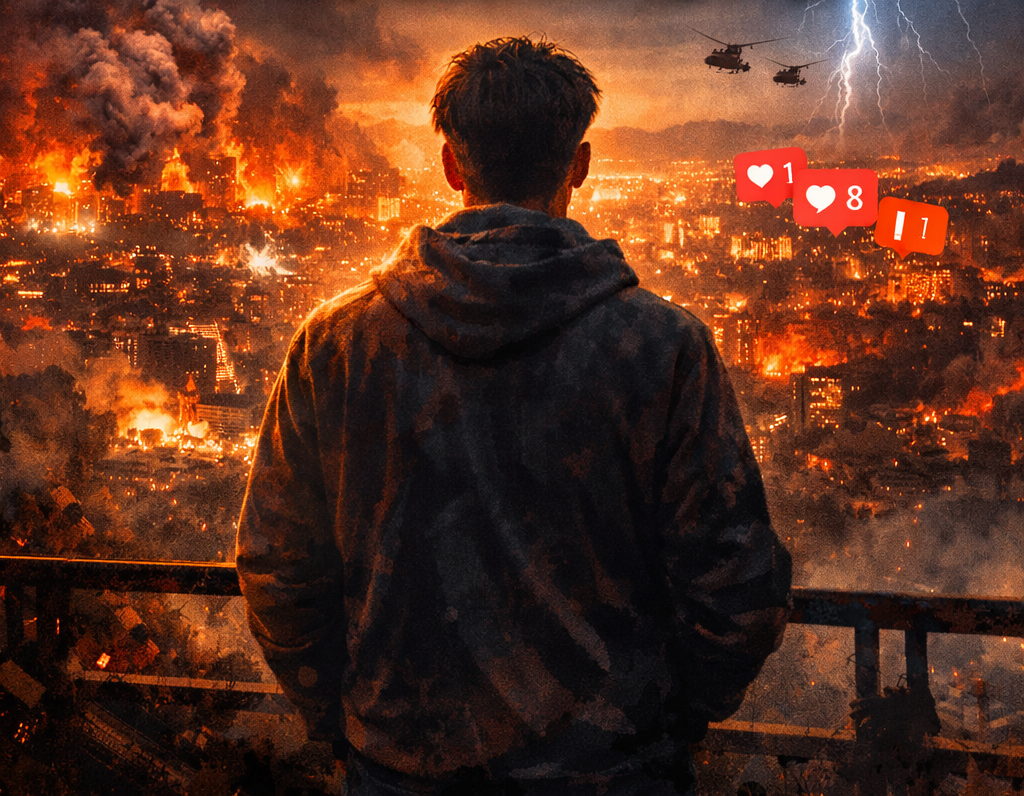
The world is going through a period of deep transformation, and for many people, it feels confusing, overwhelming, or even unreal. News moves fast, attention spans are short, and reality is often buried under entertainment, arguments, and noise. Yet beneath the surface, powerful shifts are happening at the same time across politics, society, technology, the economy, and human behavior. Understanding what is happening today requires stepping back and looking at the bigger picture rather than isolated headlines.
One of the most noticeable changes is global instability. Conflicts, tensions, and divisions are no longer limited to one region or one type of issue. Political disagreements, economic pressure, and social unrest appear in different forms across many countries. Even places once considered stable now experience polarization, protests, and uncertainty. People no longer trust institutions as they once did, and that loss of trust affects governments, media, financial systems, and even community relationships.
At the same time, the world economy is under pressure. The cost of living continues to rise for millions of people, while wages struggle to keep up. Housing, food, and basic necessities have become harder to afford, creating frustration and anxiety. Many families feel they are working more but gaining less, trapped in a system that no longer rewards effort the way it used to. This economic stress affects mental health, relationships, and the sense of future security, especially among younger generations.
Technology is another major force reshaping the world. Artificial intelligence, automation, and digital platforms are changing how people work, communicate, and think. While these tools bring convenience and innovation, they also raise serious questions. Jobs are being transformed or replaced, privacy is becoming fragile, and human attention is increasingly controlled by algorithms designed to keep people scrolling rather than thinking. Information spreads faster than ever, but truth becomes harder to identify.
Social media plays a powerful role in this transformation. It connects people globally, yet it also amplifies division. Emotions travel faster than facts, and outrage often gets more attention than understanding. People are encouraged to take sides, argue, and judge, sometimes without full context. This constant exposure to conflict can make the world feel more dangerous and hopeless than it actually is, while also numbing people to real suffering.
Another important shift is the crisis of meaning many people experience. Despite technological progress and material comfort in some parts of the world, a growing number of individuals feel lost, disconnected, or empty. Traditional sources of identity and purpose, such as religion, community, and shared values, have weakened in many societies. In their place, people often find temporary distractions rather than lasting fulfillment. This inner crisis is less visible than wars or economic data, but it deeply affects how people behave and make decisions.
Environmental concerns also continue to shape global reality. Climate changes, extreme weather events, and resource pressure influence migration, food production, and political decisions. While debates continue about responsibility and solutions, ordinary people are already feeling the effects through higher costs, disrupted lives, and uncertainty about the future of the planet. The relationship between humans and nature is being questioned more seriously than before.
Culturally, the world is experiencing rapid change. Ideas about identity, freedom, morality, and success are being challenged and redefined. Some people see this as progress, others as confusion or loss. Generational gaps are widening, as younger people grow up in a digital, fast-moving environment that older generations never experienced. This creates misunderstandings, tension, and sometimes fear on both sides.
Another critical issue is information overload. People are constantly exposed to news, opinions, and images from around the world. This can create a sense of urgency and stress, as if everything is happening at once and nothing can be controlled. In response, some people become hyper-engaged, while others completely disconnect. Both reactions are understandable, but neither fully solves the problem of understanding reality clearly.
What makes this moment unique is that many of these changes are happening simultaneously. Economic pressure, political tension, technological disruption, cultural shifts, and environmental challenges are all interacting with each other. This creates a feeling that the world is accelerating without a clear direction. For some, it feels like standing on unstable ground, where familiar rules no longer apply.
Yet within this uncertainty, there is also opportunity. Signals of awakening, reflection, and resistance to shallow thinking are appearing. More people are questioning narratives instead of blindly accepting them. Conversations about mental health, purpose, and values are becoming more open. Communities, both online and offline, are forming around shared concerns and hopes rather than old labels.
Understanding what is happening in the world today does not mean knowing every detail or predicting the future. It means recognizing patterns, asking deeper questions, and refusing to be completely controlled by fear or distraction. It means slowing down enough to think critically, listen carefully, and decide consciously how to respond.
The world is not ending, but it is changing. Old systems are being tested, old assumptions are breaking, and new realities are forming. Whether these changes lead to greater division or greater awareness depends largely on how people choose to engage with them. Awareness is the first step. Reflection is the second. Action, guided by understanding rather than reaction, is what will shape what comes next.
For anyone feeling confused by the current state of the world, that confusion is not a weakness. It is a sign that something real is happening and that simple answers are no longer enough. The challenge of our time is not only to survive these changes, but to understand them, learn from them, and remain human in the process.