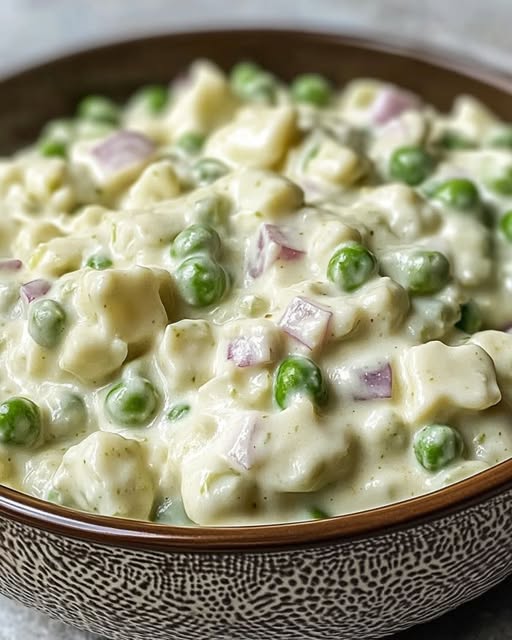
This Creamy 1950s Vintage Pea Salad
This creamy 1950s vintage pea salad is a true throwback to a time when home cooking was simple, comforting, and built around familiar pantry staples. It is the kind of dish that appeared at church potlucks, backyard picnics, holiday tables, and family reunions, always served in a large bowl with a spoon that never seemed to leave it for long.
In the 1950s, recipes were designed to be practical, affordable, and satisfying. This pea salad fits perfectly into that tradition. It is creamy without being heavy, flavorful without being complicated, and easy enough to prepare that it quickly became a household favorite.
Even today, this salad holds its charm. One bite is enough to understand why it survived generations. It tastes like comfort, tradition, and shared meals around crowded tables.
A Salad Rooted in Mid-Century Home Cooking
Mid-century American kitchens valued efficiency and flavor. Many dishes relied on canned or frozen vegetables, simple dressings, and minimal preparation. This pea salad reflects that approach beautifully.
Frozen peas were a staple in many homes, offering convenience without sacrificing color or texture. Combined with a creamy dressing and a few flavorful add-ins, they became something more than just a side dish. They became a centerpiece.
This salad was often made ahead of time, chilled, and served cold. That made it perfect for gatherings where the host wanted to enjoy company instead of staying in the kitchen.
Why This Salad Became So Popular
The popularity of this pea salad came from its balance. The peas provide a mild sweetness and tender bite. The creamy dressing adds richness. Small additions like onion or cheese bring contrast and depth.
It is also incredibly versatile. It pairs well with grilled meats, baked casseroles, sandwiches, and holiday mains. Whether served alongside ham, fried chicken, or a simple meatloaf, it fits effortlessly into the meal.
Another reason for its lasting appeal is nostalgia. For many people, this salad brings back memories of childhood dinners, handwritten recipe cards, and family members who made it the same way every time.
The Ingredients That Defined the Era
At its heart, this salad relies on a few basic ingredients that were common in 1950s kitchens. Sweet peas form the base. They are tender, colorful, and naturally balanced in flavor.
The creamy dressing usually starts with mayonnaise. It creates the smooth texture that coats the peas evenly and brings everything together. A small amount goes a long way, making the salad rich without being overwhelming.
Chopped onion adds a gentle bite and balances the sweetness of the peas. Cheese, often cubed or shredded, adds saltiness and texture. Simple seasonings finish the dish without overpowering it.
Each ingredient serves a purpose, and none feel unnecessary. That simplicity is what gives the salad its timeless appeal.
How This Salad Was Traditionally Made
The process of making this salad has always been straightforward. The peas are thawed and drained well to prevent excess moisture. This step is important to maintain the creamy texture of the finished dish.
The dressing is mixed separately, allowing the flavors to blend before being combined with the peas. Once mixed together, the salad is gently folded to avoid crushing the peas.
Chilling the salad is a key step. Time in the refrigerator allows the flavors to meld and the dressing to thicken slightly. Served cold, it tastes fresh, creamy, and perfectly balanced.
A Dish Made for Sharing
This pea salad was never meant to be eaten alone. It was designed for sharing, scooping, and passing around the table. It belongs in a large bowl, placed among other dishes, inviting everyone to take a spoonful.
It is the kind of salad that people go back for. A small serving quickly turns into a second helping. Before long, the bowl is empty.
That shared experience is part of what makes it special. It brings people together, just as it did decades ago.
Why It Still Works Today
Despite changing food trends, this salad remains relevant. Its flavors are familiar and comforting. Its texture is satisfying without being heavy.
Modern cooks appreciate recipes like this because they are reliable. There are no complicated steps or special tools. It comes together quickly and tastes good every time.
It is also easy to adapt. Some people add a bit of crunch, others adjust the seasoning, but the core recipe remains the same. That flexibility helps it fit into today’s kitchens while preserving its vintage soul.
Perfect for Holidays and Potlucks
This salad shines at gatherings. It complements rich holiday meals by offering something cool and creamy. It also works beautifully at potlucks, where it stands out among heavier dishes.
Because it can be made ahead of time, it reduces stress for the host. Preparing it the night before allows the flavors to develop and frees up time on the day of the event.
It also travels well, making it a reliable choice for sharing beyond the home.
A Recipe Passed Through Generations
Many people first tasted this salad through a parent or grandparent. It was often written on an index card, tucked into a recipe box, and pulled out for special occasions.
Those handwritten recipes carry stories. They remind us of kitchens filled with conversation, laughter, and the clatter of dishes. Making this salad today feels like honoring those moments.
Each generation adds its own touch, but the heart of the recipe remains unchanged.
Simple Variations Without Losing Tradition
While the classic version stands on its own, small variations can refresh it without losing its vintage charm. Some cooks add a bit of crunch for contrast. Others prefer a sharper or milder dressing.
The key is keeping the balance intact. The peas should remain the star, supported by the creamy dressing and subtle additions.
Too many extras can overpower the simplicity that makes the salad special.
Why Vintage Recipes Matter
Recipes like this creamy pea salad remind us that good food does not need to be complicated. They show us how past generations cooked with intention, making the most of what they had.
These dishes connect us to family history and shared experiences. They bring warmth to the table and comfort to those who eat them.
In a world of constant change, there is something grounding about returning to a recipe that has stood the test of time.
Final Thoughts
This creamy 1950s vintage pea salad is more than just a side dish. It is a piece of culinary history, a reminder of simpler times, and a recipe that continues to bring people together.
With its smooth texture, gentle sweetness, and comforting familiarity, it earns its place on the table generation after generation. Whether served at a holiday gathering, a summer picnic, or a family dinner, it carries tradition in every bite.
Some recipes fade away. Others endure. This one belongs to the latter, and for good reason.