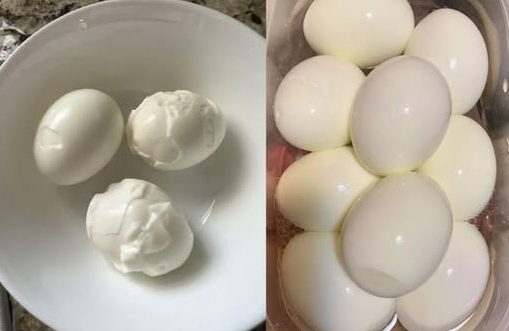
Few kitchen tasks are as universally frustrating as peeling hard-boiled eggs. You start with good intentions, only to watch chunks of egg white tear away with the shell, leaving behind a rough, uneven surface. Whether you are preparing eggs for breakfast, salads, deviled eggs, or meal prep, the peeling process can feel unnecessarily difficult.
For decades, home cooks have tried countless tricks. Adding salt to the water. Using older eggs. Peeling under running water. Rolling the egg on the counter. While some of these methods help occasionally, none seem truly reliable.
Then comes a simple, elegant solution from one of the most respected chefs in the world. Jacques Pépin, a master of classic French cooking and a teacher known for practical wisdom, shared a five-second trick that quietly solves the problem most people struggle with.
The beauty of this method lies in its simplicity. It does not require special tools, unusual ingredients, or complicated timing. It relies on understanding how an egg is built and using that knowledge to your advantage.
To understand why this trick works, it helps to know a little about egg anatomy. Inside every egg, at the wider end, there is a small air pocket. This air pocket grows larger as the egg ages. It sits between the shell and the membrane that clings to the egg white.
When eggs are boiled, the egg white expands and presses against the shell and membrane. This is what makes peeling difficult. If the membrane sticks tightly to the white, the shell takes pieces of egg with it.
Jacques Pépin’s trick targets that air pocket directly.
Before cooking the eggs, he takes a pin or the tip of a thumbtack and gently pokes a tiny hole in the wide end of the raw egg. This takes about five seconds per egg. The hole is small enough that the egg does not leak, yet large enough to make a crucial difference during cooking.
When the egg is placed into boiling water, air escapes through that tiny hole. Water then enters the space where the air pocket was. This simple exchange prevents pressure from building inside the shell and helps separate the membrane from the egg white.
As the egg cooks, the white sets smoothly without bonding as tightly to the shell. The result is an egg that peels cleanly, often in large pieces, sometimes even sliding out of the shell with minimal effort.
The process begins with choosing the eggs. While this trick works with both fresh and older eggs, it is especially helpful for fresh eggs, which are typically harder to peel. Fresh eggs have a lower pH, causing the membrane to cling more tightly to the white. Pépin’s method helps overcome that issue.
To start, locate the wider end of the egg. This is where the air pocket sits. You can usually identify it by gently tapping the egg against a flat surface and feeling for the slightly hollow end.
Using a clean pin, needle, or thumbtack, gently pierce the shell at that wider end. The pressure should be light. You are not trying to crack the egg, only to make a tiny opening through the shell. If done correctly, the egg remains intact and no egg white leaks out.
Once the eggs are prepared, place them into boiling water carefully. Lowering them in with a spoon helps prevent cracking. Cook the eggs according to your preferred doneness, whether fully hard-boiled or slightly jammy.
After cooking, transfer the eggs to cold water or an ice bath. This stops the cooking process and helps further loosen the shell. While an ice bath alone does not guarantee easy peeling, it complements the pinhole method well.
When it is time to peel, start at the wide end of the egg. Because water has entered the space beneath the shell, you will often find that the shell separates easily from the white. Many cooks are surprised by how large the shell pieces come off and how smooth the egg surface looks underneath.
One of the reasons this trick stands out is that it addresses the root cause of the problem rather than treating symptoms. Instead of trying to loosen the shell after cooking, it prevents the shell from sticking in the first place.
This technique reflects Jacques Pépin’s philosophy of cooking. He often emphasizes understanding ingredients rather than fighting them. Small adjustments made at the right moment can save time, frustration, and wasted food.
There are a few things to keep in mind when using this method. The hole must be made at the wider end of the egg. Piercing the narrow end will not access the air pocket and may cause cracking. The hole should also be small. A large hole can allow egg white to escape during cooking.
This trick is especially useful when preparing eggs for presentation. Deviled eggs, for example, benefit greatly from smooth, clean whites. Egg salad and potato salad also look better when the eggs are intact rather than torn.
For those who cook eggs in large batches, this method can be a game changer. Spending a few extra seconds per egg before cooking can save several minutes of peeling time afterward.
Some people worry about food safety when piercing raw eggs. When done cleanly and followed by proper cooking, the risk is minimal. Using a clean pin and cooking the eggs thoroughly addresses most concerns.
It is worth noting that no method is completely foolproof in every situation. Egg size, shell thickness, and cooking method can still affect results. However, this trick significantly improves consistency and success for most cooks.
What makes this technique special is not just that it works, but that it has stood the test of time. Jacques Pépin has demonstrated it for years, quietly sharing it as a practical solution rather than a flashy gimmick.
In a world full of complicated kitchen hacks, this one stands out for its elegance. It requires no extra purchases, no guessing, and no trial-and-error. Just a pin, a little knowledge, and five seconds of preparation.
If you have ever dreaded peeling hard-boiled eggs, this small adjustment can completely change your experience. Once you try it, it becomes difficult to imagine boiling eggs any other way.
Perfectly peeled eggs are no longer a matter of luck. With this simple trick, they become a reliable result of understanding how eggs behave and using that knowledge wisely.